Biological treatment
MBBR — moving bed biofilm reactor
An MBBR grows its biomass on free-moving plastic carriers instead of keeping it in suspension. Because the biofilm lives on a large protected surface, a reactor holds far more active biomass per cubic metre than a conventional activated-sludge tank — so the same tank volume can carry a much higher load.
That makes the MBBR the natural answer to two problems: adding capacity to an existing plant without building new tanks, and keeping nitrification stable when temperatures or loads swing.
In brief
An MBBR is a biological reactor in which the biomass grows as a biofilm on suspended, free-moving carriers, allowing high treatment capacity in a compact tank volume for COD and nitrogen removal.
The challenges this solves
More capacity in the same tanks
When load grows but the site cannot, carriers add active biomass to an existing tank — lifting capacity without new civil works.
Stable nitrification at low temperature
Nitrifiers slow down in the cold and can wash out under load. A protected biofilm retains them, keeping ammonia removal stable when a suspended culture would fail.
Compact and containerised biology
For decentralised or temporary duties, MBBR biology fits into a compact or containerised footprint that a conventional plant cannot match.
Technologies we apply
MBBR carriers & reactor
Free-moving carriers provide a large protected surface for the biofilm, packing high biological capacity into a compact, robust reactor for COD and nitrogen removal.
View equipmentPhysical-chemical pre-treatment
A DAF or clarification step ahead of the biology removes load peaks and the fraction that would otherwise upset the biofilm — protecting the biological stage.
View equipmentContainerised plant build
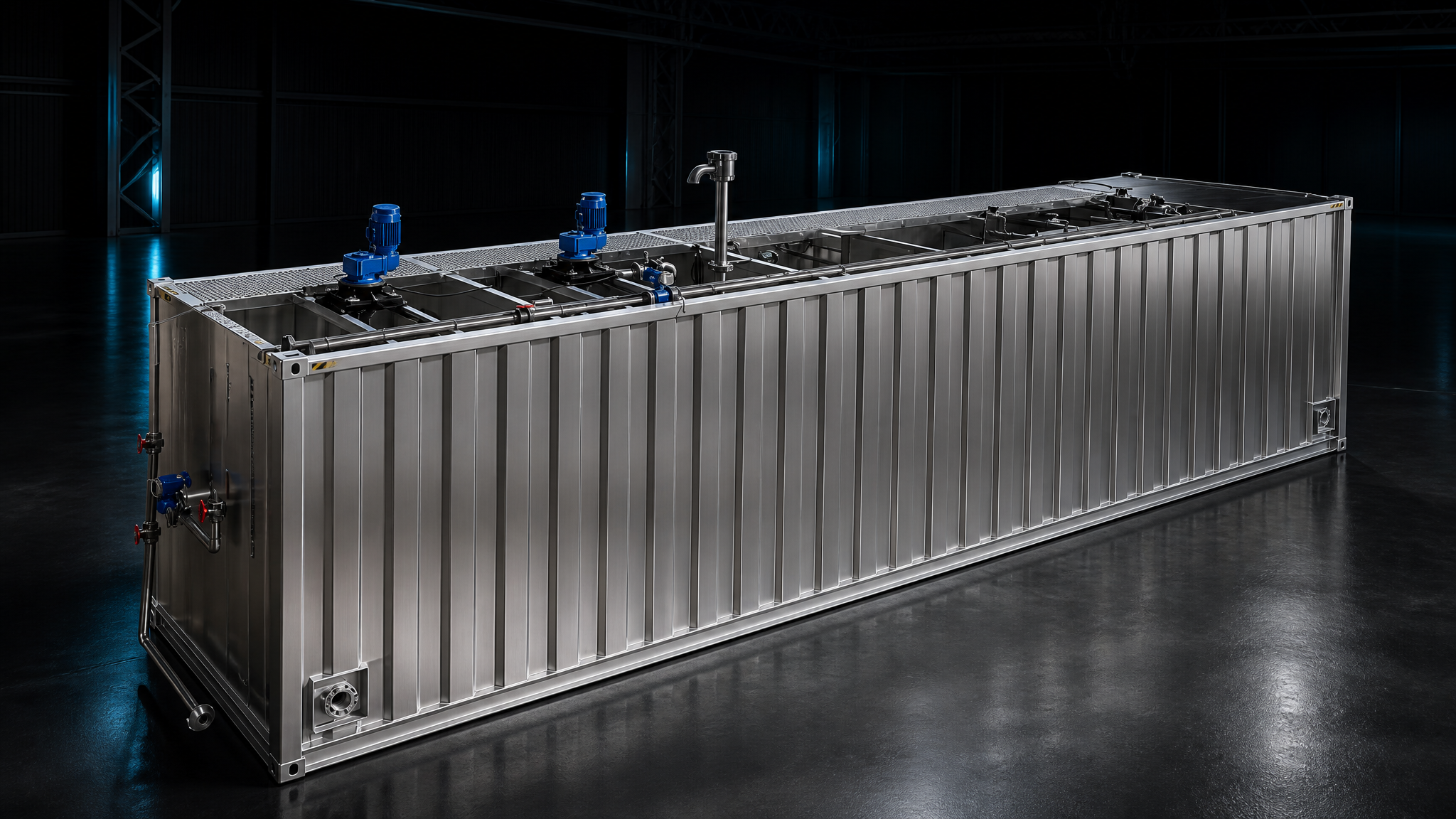
For decentralised or temporary applications, the MBBR is delivered as a pre-assembled, tested containerised unit.
View equipmentWhat is achievable
MBBR performance depends on carrier fill ratio, oxygen transfer and temperature. The ranges below are indicative and are confirmed by process design on your load.
| Parameter | Typical range |
|---|---|
| Carrier fill ratio | typically up to ~60 % of tank volume |
| Protected biofilm surface | high specific area per carrier |
| Duty | COD removal, nitrification, denitrification |
| Capacity uplift in existing tank | substantial, without new civil works |
| Build | in-tank retrofit or containerised |
How we size it
An MBBR is sized on the biological load and the target removal, together with temperature. The inputs we need are:
Key sizing inputs
- Flow and load (COD, BOD, ammonia)
- Target effluent quality
- Lowest operating temperature
- Available tank volume for a retrofit
- Whether denitrification is required
Rent or pilot first
A pilot MBBR on your own wastewater confirms the achievable carrier loading and nitrification rate before you commit — the most reliable way to size an upgrade.
Rent or pilot firstRelated reading
Frequently asked questions
Can I upgrade an activated-sludge plant to MBBR?
Yes. Adding carriers to an existing tank is one of the most common uses of the MBBR — it lifts capacity without building new tanks.
Why does MBBR nitrify better in the cold?
The nitrifiers live in a protected biofilm and cannot wash out, so they are retained even when temperature and load would strip them from a suspended culture.
What fill ratio should I use?
It depends on the load and target. Higher fill adds capacity but needs more oxygen transfer; we optimise both together for your reactor.
Can it be delivered as a container?
Yes — for decentralised or temporary duties the MBBR is built as a pre-assembled, tested containerised plant.
Engineering Hub: get this sized for your plant
Describe your goal, effluent limit or sludge volume and receive a technology shortlist plus a sizing proposal – by email, no phone call required.