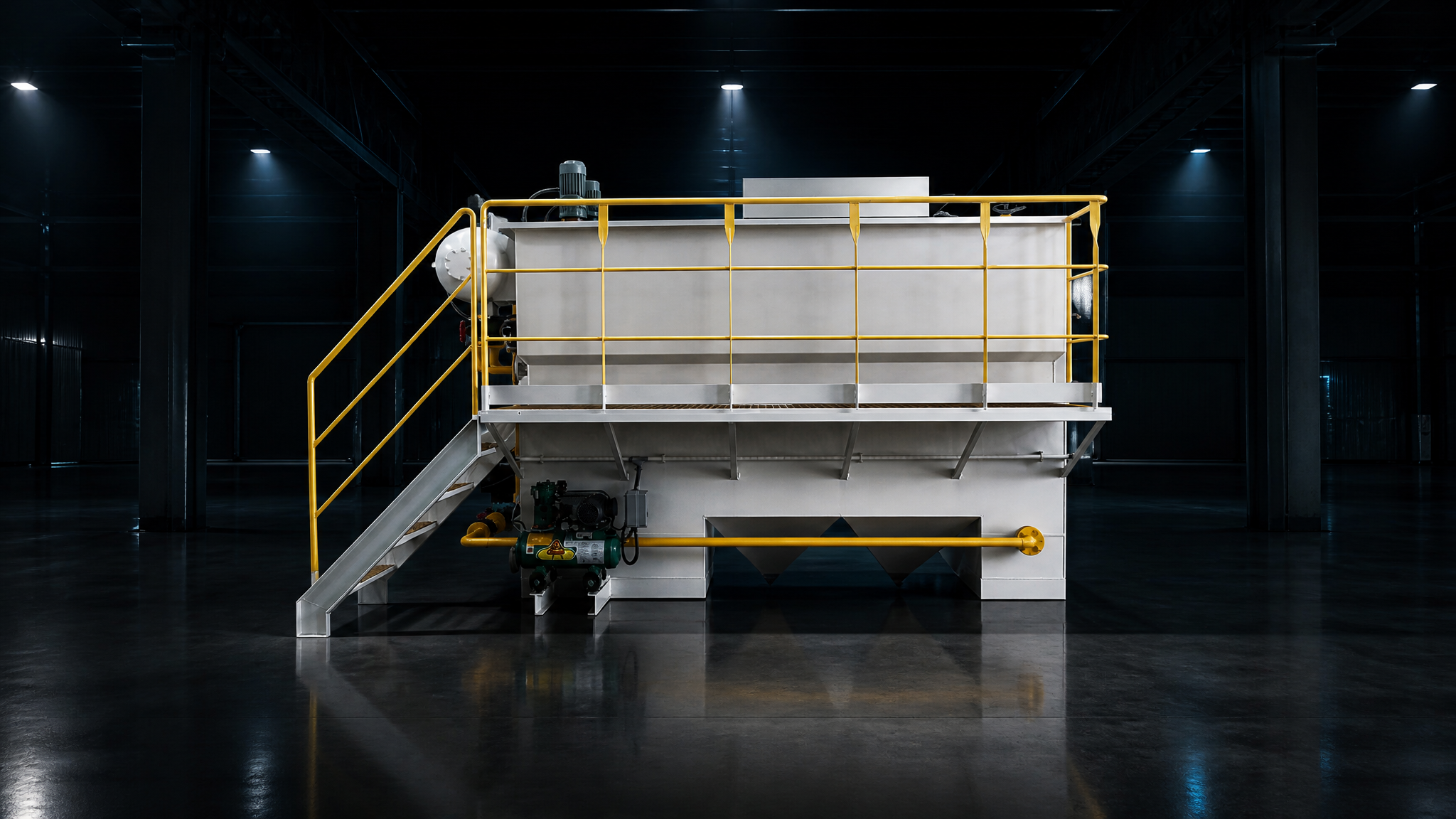
Algae removal from surface and reservoir water is critical for protecting downstream treatment processes. Algal blooms and associated turbidity can overload conventional filtration and increase operational costs.
Efficient separation of algae and particulates is achieved by combining low-shear flotation with fine filtration. This approach retains both buoyant algae and suspended solids, stabilizing water quality and improving resilience against seasonal fluctuations.
Engineering Hub: get this sized for your plant
Describe your goal, effluent limit or sludge volume and receive a technology shortlist plus a sizing proposal – by email, no phone call required.
Challenges of Algae in Surface and Reservoir Water
Surface and reservoir waters are prone to algal growth, especially during warm, nutrient-rich periods. Seasonal algal blooms can cause rapid increases in turbidity and organic load. Algae cells are typically small (5–100 µm), buoyant, and often deformable, making them difficult to retain with standard sedimentation or rapid sand filtration. In addition, extracellular organic matter released by algae can increase fouling and reduce filter run times.
Algae presence is a significant operational challenge for surface water treatment plants, particularly during peak bloom periods.
Why Conventional Processes Struggle
Traditional clarification and filtration systems are often designed for denser, mineral solids. Algae's low density and high surface area allow them to pass through or accumulate on filter surfaces, resulting in:
- Reduced filtration efficiency
- Increased head loss and backwash frequency
- Breakthrough of fine particulates and color
- Elevated risk of downstream membrane fouling or disinfection byproduct formation
Role of Low-Shear Separation and Fine Filtration
Low-shear processes are essential for algae removal, as excessive shear can break cells and release intracellular material. Dissolved air flotation (DAF) is particularly effective for separating buoyant algae and fine solids. Microbubbles attach to algae, lifting them to the surface for removal. Following flotation, pile cloth media filtration (Tuchfiltration/Polstofffiltration) provides a polishing step, capturing remaining fine particulates and ensuring stable turbidity levels.
Algae and Turbidity Removal Ranges
- Parameter
- Typical Range
- ---
- ---
- Influent turbidity (algal bloom)
- 10–100 NTU
- DAF effluent turbidity
- 2–10 NTU
- Cloth filter effluent turbidity
- 0.5–2 NTU
- Algae retention (combined)
- 90–99 %
Combining Flotation with Pile Cloth Media Filtration
A two-stage process offers robust performance for algae-laden waters:
- Dissolved Air Flotation (DAF): Removes the majority of buoyant algae and suspended solids. Operates at surface loading rates of roughly 5–15 m³/(m²·h), with chemical coagulation/flocculation to enhance removal.
- Pile Cloth Media Filtration: Provides depth filtration using a synthetic pile fabric. Filters operate at typical loading rates of 4–10 m³/(m²·h), with automatic backwashing triggered by head loss. Cloth media is effective at retaining fine particulates and residual algae, even during peak events.
This combination ensures high removal efficiency and operational flexibility, with minimal risk of filter blinding or breakthrough.
Achievable Turbidity and Solids Retention
When properly designed and operated, the combined system can achieve:
- Final effluent turbidity consistently below 2 NTU
- Algae and fine solids removal rates of 90–99 %
- Stable performance during high-load events and seasonal blooms
- Reduced frequency of downstream filter backwashing or membrane cleaning
| Stage | Turbidity (NTU) | Algae Retention (%) |
|---|---|---|
| Raw water | 10–100 | – |
| DAF | 2–10 | 70–90 |
| Cloth filter | 0.5–2 | 90–99 |
Operational and Resilience Benefits
Implementing flotation and pile cloth media filtration provides several advantages:
- Improved resilience to seasonal and event-driven spikes in algae and turbidity
- Lower chemical and energy consumption compared to repeated backwashing or advanced oxidation
- Reduced maintenance and longer filter run times
- Enhanced protection for downstream processes (e.g., membranes, disinfection)
These systems can be retrofitted into existing plants or integrated into new designs for flexible, robust surface water treatment.
Can pile cloth media filtration alone remove all algae?+
While effective for fine particulates, combining with flotation is recommended for high algae loads to prevent filter blinding and maximize removal.
What are typical operating ranges for DAF and cloth filters?+
DAF units often run at 5–15 m³/(m²·h); cloth filters at 4–10 m³/(m²·h). Actual rates depend on water quality and system design.
How often is backwashing required for cloth filters with algae?+
Backwash intervals vary, but cloth filters typically require less frequent cleaning than sand filters, even during blooms, due to their surface-loading characteristics.
What chemicals are used for coagulation in algae removal?+
Common choices include aluminum or iron salts, sometimes with polymer aids, dosed to optimize floc formation for flotation.
How does this approach affect downstream membrane processes?+
Effective algae and turbidity removal reduces membrane fouling, extends cleaning intervals, and stabilizes operation.