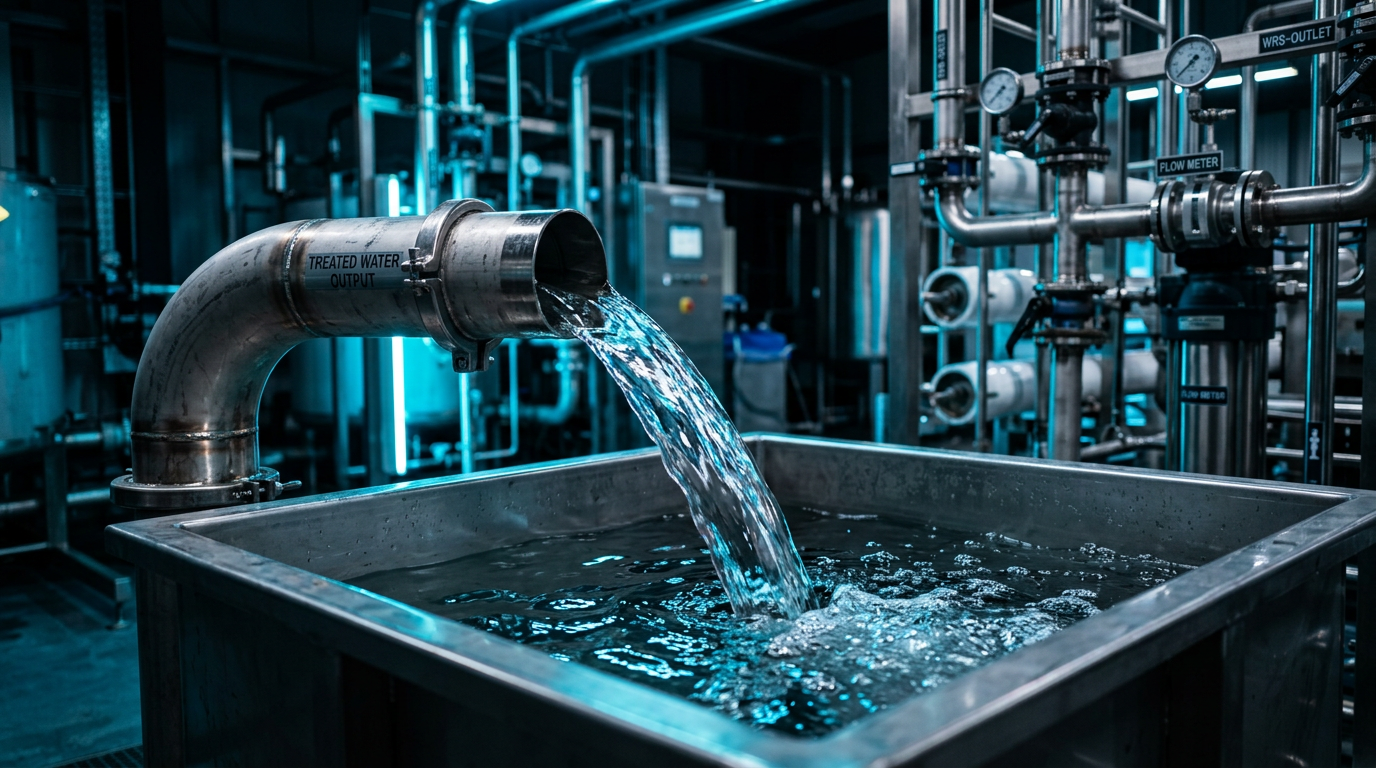
Fresh water is no longer a low-risk utility line item for many industrial sites. When prices rise and discharge rules tighten, reuse projects must be justified with a clear financial model, not just a sustainability story.
A defensible business case for industrial water reuse starts with measured flows, verified water quality needs, and a realistic view of operating costs. The goal is to show how treated effluent can replace purchased water, reduce disposal volumes, and recover capital within an acceptable period.
Engineering Hub: get this sized for your plant
Describe your goal, effluent limit or sludge volume and receive a technology shortlist plus a sizing proposal – by email, no phone call required.
Start with the right baseline
Begin by mapping current water use by stream, shift, and season. Separate make-up water, process water, cooling tower losses, wash water, and any intermittent peaks so the reuse opportunity is tied to actual demand rather than annual averages.
Use at least several months of utility bills, discharge invoices, and onsite meter data to define the baseline. This gives you a defensible reference point for the business case and helps avoid overstating savings from unrealistic replacement rates.
Build the ROI model around three value drivers
The first value driver is avoided freshwater purchase, usually the largest direct saving. Estimate the reused volume that can displace incoming water at a specific tariff, then apply a conservative utilization factor to reflect downtime, water-quality variability, and seasonal changes.
The second driver is avoided discharge fees, which can be significant where sewer charges, trade effluent fees, or surcharge components are high. The third driver is reduced risk from future tariff increases, which should be shown as a sensitivity case rather than treated as guaranteed savings.
Match treatment scope to the reuse target
For many industrial sites, a cloth filter and dissolved air flotation unit can remove suspended solids, oils, and flotation-amenable contaminants before reuse. That combination is often suitable as a front-end treatment step for applications such as utility water, washdown, or cooling tower make-up, depending on the required quality.
Do not overspecify treatment. The most credible projects select only the level of treatment needed to meet end-use demand, because excessive treatment can erode payback even when reuse volumes are high.
[Business case inputs]
- Baseline water cost
- Purchased water, pumping, and intake charges
- Avoided cost streams
- Freshwater, discharge, and surcharges
- Payback metrics
- Simple payback, discounted payback, and sensitivity range
| Step | Input | Output |
|---|---|---|
| Measure demand | Metered reuse candidate flow and quality | Usable volume per year |
| Price savings | Water tariff and discharge fee data | Annual avoided cost |
| Test capital case | Capex, Opex, contingency | Payback and sensitivity range |
[How to keep the case defensible]
Use conservative assumptions and document every source. If the reuse stream varies, show best case, base case, and downside case so decision-makers can see where the project remains attractive.
[What to include in the finance pack]
- Current water and discharge bills for at least one full year
- Metered or estimated reuse volumes by process area
- Treatment capex, operating cost, and replacement parts allowance
- Sensitivity cases for tariff escalation and uptime
First question about industrial water reuse business case payback?+
A credible payback model uses conservative reused volumes, verified utility tariffs, and realistic operating costs. Many industrial projects are evaluated on a simple payback of 3 to 6 years, but the acceptable range depends on internal capital rules and risk tolerance.
Second question about treated effluent reuse cooling tower makeup?+
Treated effluent can be a strong candidate for cooling tower make-up when solids, oil, and residual contaminants are controlled. The business case should include make-up savings, reduced blowdown-related losses where applicable, and any extra treatment needed to protect the cooling system.
Third question about reuse quality requirements process water?+
Process water requirements depend on the end use, so the quality target must be defined before the financial model is finalized. In many cases, suspended solids, oil and grease, and turbidity are the main constraints that determine whether cloth filtration and DAF are sufficient.
Equipment we supply for this
Engineering Hub: get this sized for your plant
Describe your goal, effluent limit or sludge volume and receive a technology shortlist plus a sizing proposal – by email, no phone call required.