Engineering Hub: get this sized for your plant
Describe your goal, effluent limit or sludge volume and receive a technology shortlist plus a sizing proposal – by email, no phone call required.
When a dewatering unit goes down, the problem is rarely limited to the machine itself. Sludge continues to accumulate in tanks, containers, and buffer storage, and every hour of delay can increase hauling frequency, odour complaints, and process instability. If a rental unit is needed on site within days, the fastest path to success is not simply asking for “a dewatering machine”, but providing enough process and site information for the supplier to size, mobilise, and commission the right system.
The most common reason emergency rental projects slip is incomplete input data. A well-prepared request can cut back-and-forth significantly and reduce the risk of showing up with equipment that cannot handle the sludge, the utilities, or the available footprint.
Emergency rental specification at a glance
- Topic
- What to confirm before ordering
- Best input set
- Sludge characteristics, target capacity, utilities, site access, and discharge conditions
- Typical mobilisation window
- Roughly 2 to 10 business days, depending on location, scope, and prep work
- Main risk
- Wrong polymer fit, insufficient utilities, or access constraints at the plant
- Decision focus
- Compare rental cost plus logistics against repair downtime and sludge storage limits
24-72 hours
Time needed to assemble a useful technical brief in many emergencies
5-15%
Typical capacity margin many operators try to keep above average daily load
2-5 critical utilities
Common minimum checklist: power, water, drainage, and discharge path
1 missed detail
Can add days to commissioning if discovered only after delivery
What to gather before calling a rental supplier
Start with the sludge. Suppliers need to know whether they are dealing with primary sludge, waste activated sludge, digested sludge, mixed sludge, or a more variable industrial stream. The dewatering behaviour, solids content, and polymer demand can differ sharply between these types. If possible, provide recent lab data or plant records for dry solids content, feed temperature, pH, and any history of foaming, grease, fibres, grit, or chemical carryover.
Next, define the volume. A rental supplier will usually ask for average daily sludge flow, peak flow, expected operating hours per day, and how long the emergency condition may last. If exact figures are not available, a realistic range is still useful. It is better to state “8 to 12 m³/h at peak” than to give a single uncertain number. Also clarify the target: do you need to keep up with continuous production, or is partial relief enough to prevent overflow while a repair is completed?
Polymer compatibility is another common bottleneck. Share the polymer type, make-up concentration, and dilution water quality. If the supplier is expected to provide polymer, ask whether jar tests are needed. A mismatch between sludge chemistry and polymer selection can reduce capture efficiency and create unstable cake dryness.
Logistics checklist for a rental unit
Even a well-sized unit can fail to arrive on time if the plant is not ready. Confirm the power supply first: voltage, frequency, available amperage, plug type, and whether a temporary distribution board is required. Rental units may need different electrical interfaces depending on the drive package, polymer system, control cabinet, and conveyors.
Water supply is equally important. Many temporary dewatering systems need wash water, make-up water for polymer dilution, or both. Check pressure, flow rate, and connection point. Flag early if water must be tankered in or hoses laid across traffic routes.
Plan the discharge point before delivery. The cake container or conveyor route should be defined with enough space for safe loading and change-out. The filtrate or centrate route should also be confirmed, including any temporary return to headworks or drain. An unclear discharge path on arrival day can stop commissioning immediately.
Finally, review the access route. Measure gate widths, turning radii, overhead clearance, floor loading, and any restrictions for trailers, forklifts, or crane lifts. Temporary units often arrive on skids, trailers, or in modular containers. A route that works for a maintenance truck may still be too tight for a dewatering package with ancillary tanks and hoses.
Typical mobilisation timeline and what can go wrong
For a standard emergency rental, mobilisation often falls in the range of 2 to 10 business days. Tight timelines can be extended by stock availability, special voltage requirements, polymer system changes, or site permits. Common failure points include discovering at delivery that the power supply is incompatible, the water connection is missing, or the access route is blocked. Incomplete responsibility assignment is another frequent issue: a clear scope list prevents this.
Handover and commissioning steps
Treat commissioning as a structured sequence, not an informal drop-off. Start with a site walk-through, utility verification, and safety review. Confirm the set-up location, feed point, cake handling area, filtrate return, and emergency stop access. Then check mechanical assembly, electrical connections, and polymer preparation before introducing sludge. Dry testing should verify rotation direction, alarms, and interlocks. The first wet run should use controlled feed rates with close monitoring of filtrate clarity, cake dryness, and polymer response.
Mobilisation checklist for a rental dewatering unit
- 1Collect sludge data and daily volumes
- 2Confirm power, water, and discharge routes
- 3Validate access, installation, and commissioning responsibilities
What a good emergency brief should include
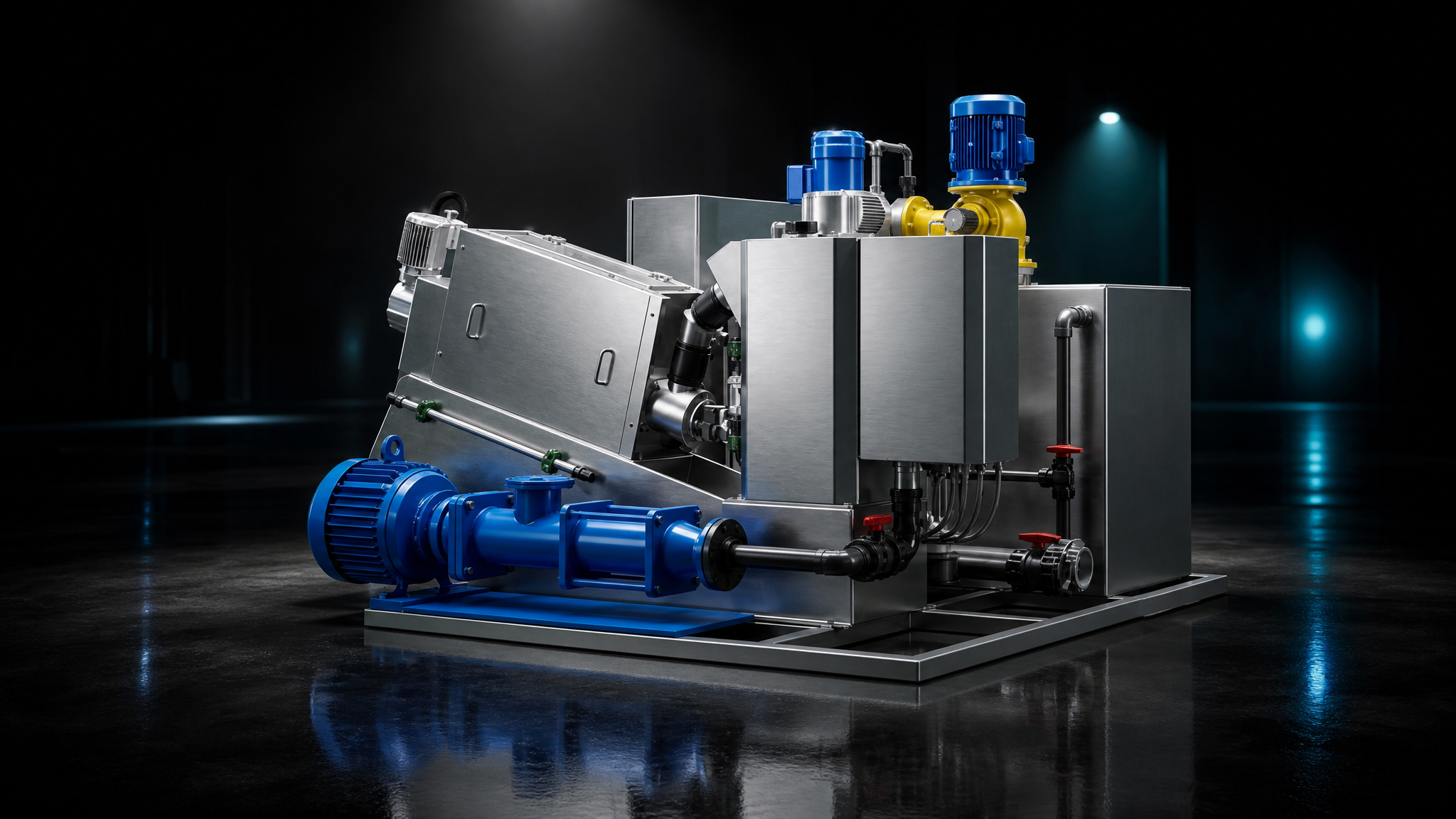
A useful brief is short, factual, and specific. It should state the sludge type, recent dry solids range, average and peak volumes, current polymer and make-up conditions, available utilities, discharge expectations, access constraints, and the target start date. Add photos of the installation area if possible. The better the brief, the faster a supplier can recommend a screw-press package or a customised temporary solution that fits the site without avoidable redesign.
How much information is enough to request a rental dewatering unit?+
At minimum, provide sludge type, solids content, daily and peak volume, current polymer details, utilities available on site, and the intended discharge route. More detail reduces commissioning risk.
Is rental always cheaper than emergency repair?+
Not always. Rental can cost more on paper, but it may reduce the total outage cost if it restores capacity faster and avoids sludge hauling, overflow, or compliance issues.
What is the most common reason a rental project is delayed?+
Site readiness problems are the most common cause: missing power, missing water, unclear discharge points, or access limitations that are only discovered after transport has started.
Equipment we supply for this
Engineering Hub: get this sized for your plant
Describe your goal, effluent limit or sludge volume and receive a technology shortlist plus a sizing proposal – by email, no phone call required.