Engineering Hub: get this sized for your plant
Describe your goal, effluent limit or sludge volume and receive a technology shortlist plus a sizing proposal – by email, no phone call required.
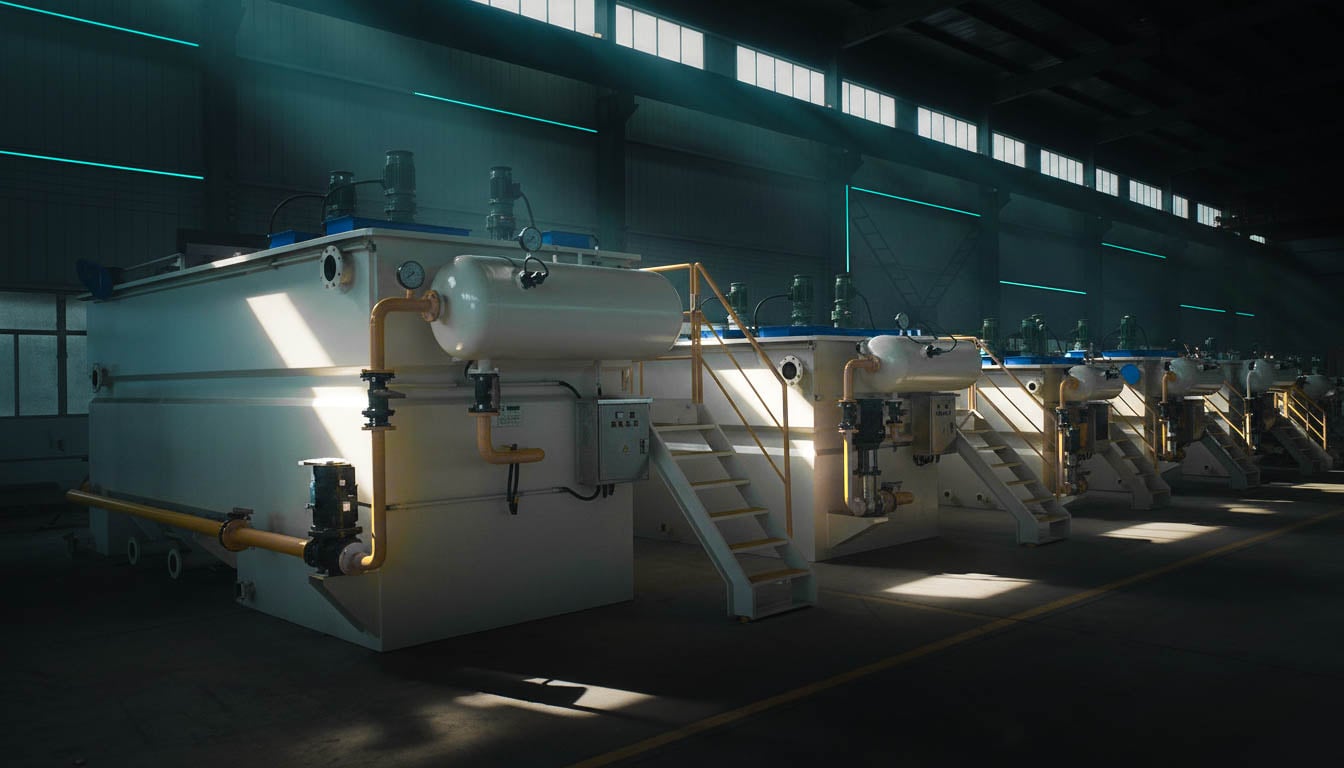
Before a capital project is approved, most teams do not need another brochure-level promise that the process "works in principle." They need defensible proof on their own wastewater, with their own variability, under their own operating constraints. That is exactly what a well-designed pilot trial should deliver: not just a yes/no answer, but a structured reduction in technical and financial risk. For flotation and mechanical dewatering projects, the right rental trial can show whether a dissolved air flotation system, a screw-press, or a staged combination will meet performance targets, how sensitive the process is to influent swings, and what it will cost to run at full scale.
The critical point is that a pilot trial is only useful if it is designed like an engineering investigation. A short demonstration that captures one "good day" is not enough. To support capex, the trial must define the design basis, stress the process across realistic failure modes, and generate data that can be translated into operating cost, sludge production, and payback assumptions.
Pilot trial design at a glance
- Objective
- Reduce investment risk before capex approval
- Best tools
- Rental DAF, screw-press, or combined pilot train
- Core outputs
- Removal efficiency, solids capture, sludge volume, polymer demand, operating stability
- Typical duration
- 2 to 8 weeks, depending on process variability and seasonality
- Key test condition
- Normal operation plus upset and worst-case scenarios
- Decision value
- Converts bench-scale assumptions into site-specific evidence
| Question | Practical engineering answer |
|---|---|
| How long should a dewatering trial run? | Long enough to cover feed variability and at least one representative upset. For many wastewaters that means 2 to 4 weeks minimum; for seasonal or highly variable streams, 6 to 8 weeks is more defensible. |
| What should a trial DAF unit on site test? | Multiple surface loadings and recycle pressures. Site testing is essential because emulsified oils, surfactants, and suspended solids behave differently than they do in the lab. |
| What data to collect? | Mass balance data: influent and effluent flow, TSS, COD, sludge solids, polymer consumption, power use, and downtime events. |
| How to size a pilot trial wastewater treatment rental unit? | Size to reproduce the intended process window, not just peak flow. Allow controlled adjustment of hydraulic loading, polymer dose, and sludge withdrawal. |
Designing the trial so it can be defended
A rigorous pilot trial starts with a clear decision question: prove discharge compliance, reduce hauling costs, recover water for reuse, or de-risk a specific dewatering step. The answer determines the metrics you must track. For a DAF trial, essential variables include influent flow, solids, oil and grease, turbidity, pH, temperature, coagulant and polymer dose, recycle ratio, floated solids concentration, and clarified effluent quality. For a screw-press trial, the emphasis shifts to feed solids, cake dryness, throughput, polymer response, filtrate quality, and discharge cake stability. The trial should also define acceptance criteria before it starts — minimum solids removal, maximum effluent turbidity, acceptable cake dryness, maximum polymer consumption. Without agreed criteria, the team can end up with data that is interesting but not decision-grade.
A practical pilot trial method
- Define the project decision and success criteria before mobilization
- Characterize the wastewater first, including expected seasonal and production-driven variability
- Select a rental pilot unit that matches the intended full-scale process
- Run baseline conditions long enough to stabilize the system
- Test normal, high-load, low-load, and upset conditions deliberately
- Record mass balance data for flow, solids, chemicals, energy, and sludge
- Capture operating issues such as foaming, carryover, blinding, or torque spikes
- Translate pilot data into annual operating cost and sensitivity cases for the investment model
A strong methodology must also test failure modes, not avoid them. In flotation systems, common failure modes include variable solids loading, surfactant interference, poor bubble attachment, and unstable floc formation. In screw-press trials, failure modes often include weak floc, screen blinding, cake slippage, and performance drift as the feed changes. These are the conditions that determine whether the full-scale plant will be robust or fragile.
How to translate pilot results into an investment case is where many trials fail to create value. The output must be converted into business terms: tonnes of sludge per year, truck movements avoided, polymer cost per cubic metre, power consumption, and maintenance hours. These figures should be presented as ranges, not promises. A conservative case built from measured pilot data is far more persuasive than a single optimistic projection. The strongest investment case shows the process performs across a realistic range, identifies the real operating risks, and quantifies how those risks affect cost.
What is the purpose of a proof of concept before capex water treatment?+
To confirm on-site performance with actual wastewater before committing to full-scale equipment. It should verify process effectiveness, identify operating constraints, and produce data that supports both design and budgeting.
What should a pilot trial data collection methodology include?+
At minimum: influent and effluent flow, solids, key contaminants, chemical dose, sludge or cake characteristics, energy use, downtime, and upset events. The data set should support a mass balance and an operating cost estimate.
What makes a trial DAF unit on site more reliable than lab-only testing?+
On-site testing exposes the process to real variability in emulsions, surfactants, temperature, and solids loading. That is essential for judging clarity, sludge characteristics, and control stability under actual plant conditions.
Equipment we supply for this
Engineering Hub: get this sized for your plant
Describe your goal, effluent limit or sludge volume and receive a technology shortlist plus a sizing proposal – by email, no phone call required.