Engineering Hub: get this sized for your plant
Describe your goal, effluent limit or sludge volume and receive a technology shortlist plus a sizing proposal – by email, no phone call required.
For industrial operators under pressure to add treatment capacity quickly, the choice between a skid-mounted package and a site-built plant is not just about capital expenditure. It is about total cost of ownership, schedule certainty, and risk over the life of the asset. In wastewater treatment, the lowest bid often becomes the most expensive option once civil works, utility tie-ins, commissioning delays, and late design changes are included. If the business goal is to have treatment running in a few months, not after a two-year construction project, the delivery model matters as much as the process itself.
- Decision factor
- Why it matters
- Lead time
- Skid-mounted and containerised systems are typically delivered in months, not years, because most process equipment is built and tested offsite
- Total cost of ownership
- Site-built plants often carry hidden costs from civil works, contractor interfaces, change orders, and extended commissioning
- Risk profile
- Modular units reduce schedule, technical, and financial risk through factory testing and controlled assembly
- Flexibility
- Skid and container formats support phased expansion, relocation, and redeployment if production changes
- Commercial value
- Portable assets can retain resale value, while fixed civil infrastructure is usually sunk cost
A site-built plant is not always the wrong answer. For very large flows or heavily integrated infrastructure, it may be the best long-term solution. But many industrial wastewater projects are smaller, urgent, and sensitive to production downtime. In those cases, the hidden cost drivers of a traditional construction project can outweigh the apparent benefit of a custom civil installation. Foundations, pipe trenches, building structures, electrical rooms, and site access all become part of the budget. Every interface between disciplines adds risk and another chance for delay.
| Aspect | Skid-mounted / containerised plant | Site-built plant |
|---|---|---|
| Initial schedule | Shorter fabrication and assembly window | Longer engineering, procurement, and construction period |
| Civil works | Limited to pads, connections, and local supports | Significant excavation, structures, and concrete scope |
| Commissioning | Factory testing reduces startup uncertainty | More issues discovered onsite, often under time pressure |
| Design changes | Easier to modify before shipment | Changes during construction can trigger expensive rework |
| Scalability | Add modules as flow or load increases | Expansion may require new civil and utility work |
| Residual value | Higher potential for relocation or resale | Low residual value once embedded in site works |
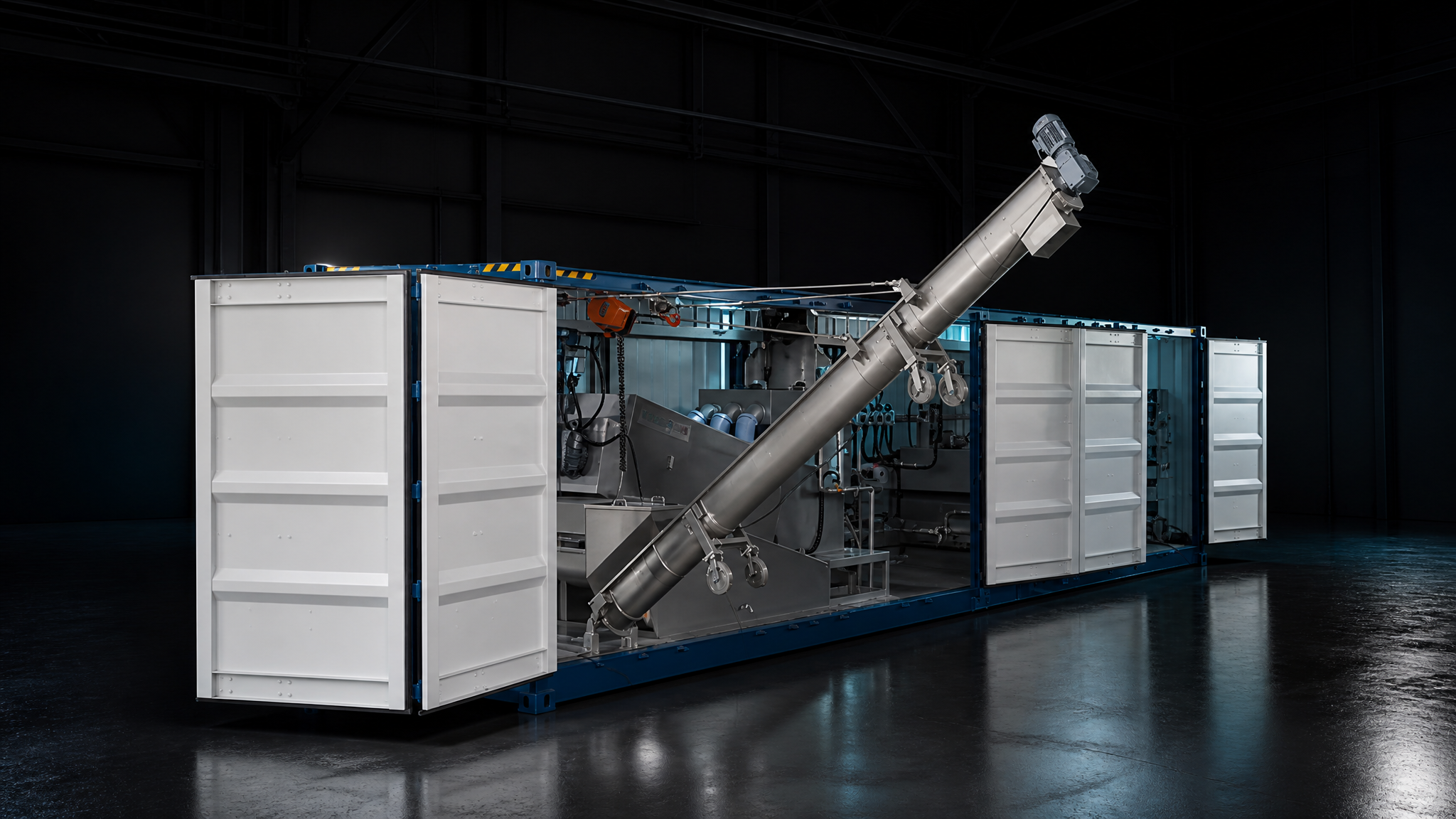
The key economic difference is that skid-mounted systems convert much of the field uncertainty into controlled factory work. In a prefabricated wastewater plant installation, process piping, mechanical assembly, wiring, and functional checks are completed in a repeatable environment. That means fewer wet trades on site, fewer weather-related delays, and fewer surprises when the plant is connected to the actual effluent stream.
One of the strongest arguments for a containerised wastewater treatment plant lead time advantage is not simply speed, but timing certainty. The value of a project is rarely created when concrete is poured — it is created when treatment is online and the discharge permit or production requirement is met. If the plant is late, the hidden cost may include tanker disposal, temporary bypass arrangements, or lost output. These are often more expensive than the equipment itself.
Engineering note: total cost of ownership should include process performance risk, not only purchase price. A lower CAPEX site-built option can become more expensive if commissioning takes months longer than planned, if civil constraints force design compromises, or if process tuning requires repeated subcontractor visits. For many industrial users, the cost of one month of delayed startup can exceed the premium of a modular package.
Modular filtration systems industrial users choose today are often designed around a phased operating strategy. Instead of building for peak load on day one, owners can install the base treatment module now and expand later as production increases or compliance requirements tighten. This avoids overbuilding and preserves capital for later use. It also protects against investing in permanent civil structures that may be oversized if the process changes.
Factory acceptance testing for modular plant projects directly reduces startup risk. During factory acceptance test activities, the owner can verify instrumentation logic, pump sequencing, valve actions, alarms, and mechanical fit before shipment. Problems that would be expensive to discover onsite are found earlier, when correction is easier. The result is a smoother commissioning phase and a better understanding of performance boundaries and operating procedures.
- Confirm the required treatment objective, flow range, and influent variability before selecting the delivery model.
- Compare full installed cost, not just equipment price, including civil works, building services, and site interfaces.
- Request a defined factory acceptance test scope for mechanical, electrical, and control functions.
- Plan utility tie-ins and footprint requirements early to avoid late redesign.
- Evaluate whether phased expansion or relocation could create future value.
- Include commissioning duration and temporary operating measures in the business case.
There is also a strategic asset-value advantage. A containerised or skid-mounted plant can sometimes be relocated, repurposed, or sold if the process changes or the site closes. By contrast, a site-built plant locks value into foundations, buildings, and site-specific piping. If the production profile changes, much of that investment cannot be recovered. In uncertain industrial environments, optionality has real financial value.
What is the typical containerised wastewater treatment plant lead time compared with site-built?+
For many industrial applications, a containerised wastewater treatment plant can be delivered in a few months, depending on process complexity and utility integration. Site-built projects usually require a longer end-to-end schedule because civil works and onsite coordination add time and uncertainty.
What are the main skid mounted treatment unit advantages?+
The main advantages are shorter delivery time, reduced onsite construction, easier commissioning, and lower exposure to weather and contractor-interface delays. Skid-mounted units also make it easier to relocate the asset or expand capacity in modules.
How does total cost of ownership compare for skid vs site-built plants?+
A skid-mounted system often has a lower total cost of ownership when hidden costs are included, such as civil works, commissioning delays, design changes, and startup risk. Site-built plants may appear cheaper at first, but the final installed and operational cost can be higher if the project faces rework or delayed startup.
Equipment we supply for this
Engineering Hub: get this sized for your plant
Describe your goal, effluent limit or sludge volume and receive a technology shortlist plus a sizing proposal – by email, no phone call required.