Engineering Hub: get this sized for your plant
Describe your goal, effluent limit or sludge volume and receive a technology shortlist plus a sizing proposal – by email, no phone call required.
Sludge Disposal Cost: Why Better Dewatering Is a Financial Decision
For many wastewater facilities, sludge disposal is one of the largest recurring costs on the P&L. Every percentage point of dry solids improvement can reduce hauled volume, cut transport frequency, and lower disposal charges — which is why dewatering should be evaluated as a financial investment, not only as a process upgrade.
The central question for management: what is the value of removing more water before sludge leaves the plant? The answer is measured in fewer truckloads, lower tipping fees, and more resilient operations. The challenge is to quantify those benefits in a way that is credible and easy to approve.
What Makes Sludge Disposal So Expensive?
Disposal cost is usually driven by several interacting factors:
- Wet tonnage or hauled volume: The more water in the sludge cake, the more mass and volume you pay to move.
- Transport frequency: More truck movements increase freight cost, loading time, and coordination effort.
- Gate fees and landfill charges: Disposal sites often charge by weight, volume, or both, depending on local rules.
- Storage and handling: Poor dewatering can force larger buffers, more cleaning, and additional labor.
A small change in cake dryness can have a large downstream effect. Improving from 18% to 23% dry solids may sound modest, but it can materially reduce the number of loads required over a year.
[Financial Quick Check]
- Label
- Value
- Baseline dry solids
- Often 15%–22% for many municipal sludge streams
- Typical improvement target
- +3 to +8 percentage points, depending on feed sludge and equipment
- Main savings lever
- Reduced hauled mass and fewer truck movements
- Payback profile
- Commonly evaluated over 12–36 months, depending on site-specific economics
How to Calculate ROI for Better Dewatering
A robust ROI calculation should compare the current disposal model with the improved scenario. The goal is to isolate the economics of dryness improvement and avoid overstating the case.
#### 1. Establish the baseline
Start with the current annual sludge disposal cost:
- Average sludge production in wet tons or cubic meters
- Current cake dry solids percentage
- Number of truckloads per week or month
- Unit cost for transport and disposal
- Labor and consumables tied to the current process
#### 2. Define the improved case
Estimate the expected post-upgrade dry solids level using realistic engineering ranges. For a screw press, the benefit depends on sludge type, upstream conditioning, and operating discipline. Use a conservative range rather than a single optimistic number.
#### 3. Convert dryness into savings
The key relationship is mass balance. If the dry solids mass stays constant, higher cake dryness means less water to transport. This reduces:
- Truckloads per year
- Transport miles and fuel use
- Disposal fees tied to gross weight or volume
- Handling and labor time
#### 4. Include implementation costs
Management will expect the full cost of change, including:
- Equipment purchase
- Installation and integration
- Polymer optimization or conditioning changes
- Maintenance and spare parts
- Energy use and operating labor
#### 5. Calculate net annual benefit and payback
A simple business-case formula is:
Net annual benefit = annual disposal savings + labor savings + avoided costs - added operating costs
Payback period = total project cost / net annual benefit
For a fuller view, many teams also calculate net present value over 5 to 10 years using an internal discount rate.
The Cost Drivers Management Will Care About
When presenting to leadership, focus on cost drivers they already understand:
- Every truck saved matters: one fewer haul per week can translate into measurable annual savings.
- Disposal price volatility: higher dryness reduces exposure to changing gate fees and freight rates.
- Labor efficiency: less sludge handling means fewer hours spent on unloading, cleaning, and supervision.
- Plant resilience: better dewatering can provide operational headroom during peaks or upset conditions.
Connect technical performance to financial outcomes: show what dry solids improvement means in annual tons hauled, number of trips, and total cost saved.
1 truckload
Can represent several tonnes of avoided hauled water per trip
3%–8% DS increase
Often enough to create visible cost reduction
12–36 months
Common ROI review window for dewatering projects
5–10 years
Typical horizon for lifecycle business-case analysis
How to Present the Business Case to Management
Management typically wants a short, defensible story backed by a few clear numbers.
#### Use a three-part structure
- Problem: Sludge disposal is the biggest operating cost and is rising.
- Solution: Better dewatering reduces water content before sludge leaves site.
- Result: Fewer truckloads, lower annual disposal cost, improved process resilience.
#### Keep assumptions conservative
Use realistic ranges for cake dryness improvement, disposal fees, and uptime. A credible model is more likely to be approved than an aggressive one.
#### Show sensitivity
Present a simple sensitivity table with three scenarios:
- Conservative
- Expected
- Upside
This helps decision-makers understand how the project performs if sludge characteristics or disposal prices change.
Why a Screw Press Often Supports the Economics
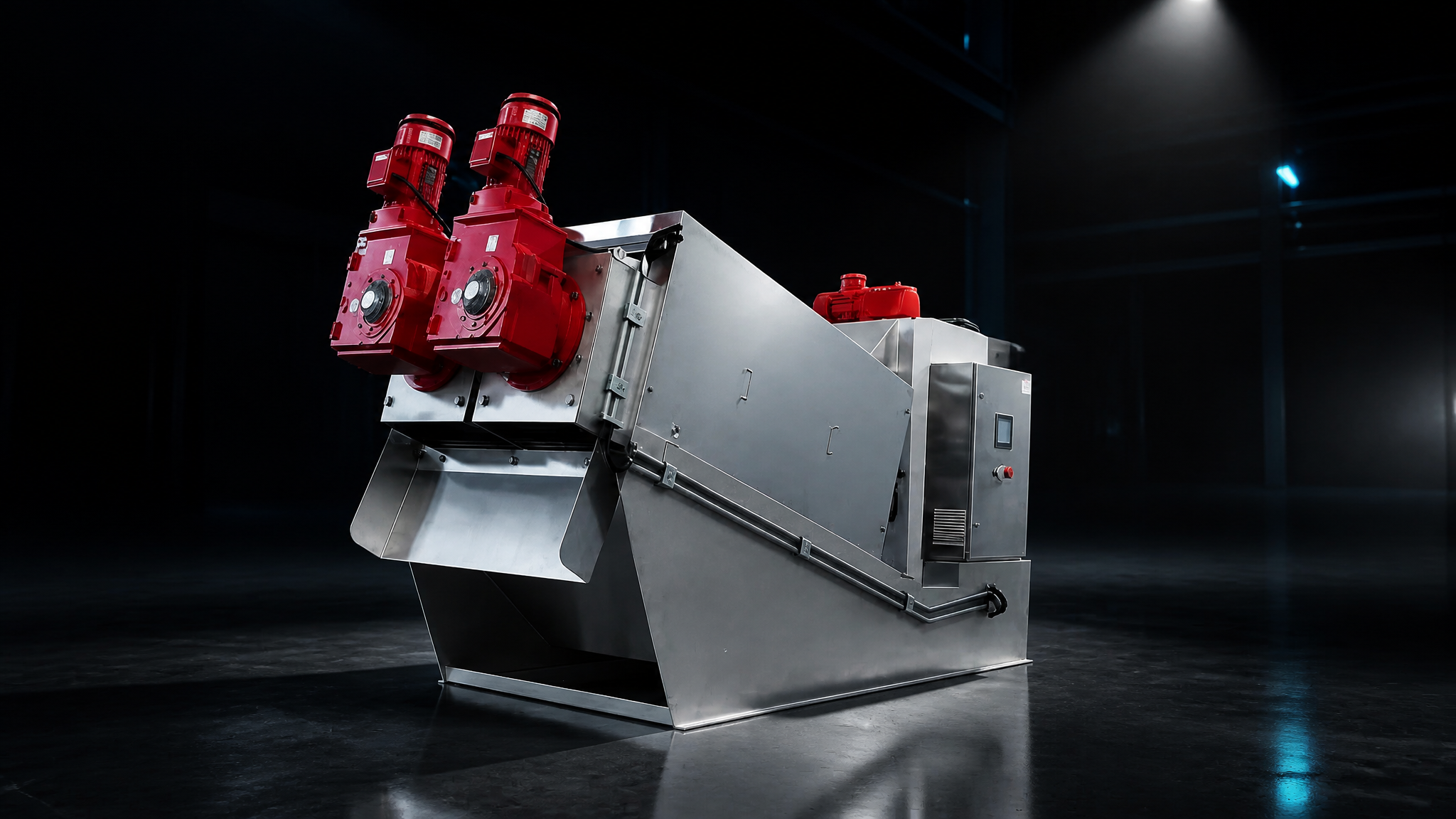
A screw press can deliver stable dewatering performance with relatively low energy demand and straightforward operation. The main financial value is the reduction in transported water and disposal intensity. If the equipment improves dryness enough to save even a few truckloads each month, the annual impact can be meaningful.
[Business-Case Tip]
Focus the discussion on cost per tonne of dry solids removed, not just equipment price. That metric makes it easier to compare dewatering options and explain lifecycle value to non-technical stakeholders.
[ROI Method in 4 Steps]
- 1Baseline disposal cost
- 2Estimate improved dry solids
- 3Convert to truck and fee savings
- 4Subtract added operating and capital cost
What is the best metric for evaluating a dewatering upgrade?+
Cost per tonne of dry solids removed is usually the most useful metric because it links process performance to disposal economics.
How much dryness improvement is needed to justify investment?+
There is no universal threshold. In many facilities, even a few percentage points of improvement can create meaningful savings if disposal costs are high.
Should labor savings be included in the ROI model?+
Yes. Labor, handling, cleaning, and process disruption can be significant and should be counted when they are directly affected by the upgrade.
Equipment we supply for this
Engineering Hub: get this sized for your plant
Describe your goal, effluent limit or sludge volume and receive a technology shortlist plus a sizing proposal – by email, no phone call required.