Keeping nitrification stable at low temperature
- Label
- Value
- Main winter symptom
- Ammonia rises in the effluent while BOD removal may still look acceptable
- Primary engineering fix
- Add or retrofit MBBR capacity to retain nitrifiers at low temperature
- Most sensitive process group
- Slow-growing nitrifying bacteria, especially under short sludge age
- Typical cold-weather focus
- Oxygen transfer, carrier filling ratio, and inhibition checks
- Best short-term diagnostic
- Compare temperature, sludge age, and ammonia conversion trend over several days
5 to 10 °C
Typical temperature band where nitrification often becomes unstable
40 to 70 %
Common MBBR carrier filling ratio range for winter nitrification support
0.2 to 0.8 kg NH4-N/m³·d
Indicative nitrification loading range, depending on media and design
Winter nitrification failure should not be treated as a temporary nuisance. If ammonia peaks are ignored, the plant can drift into repeated permit exceedances, biological stress, and higher downstream oxygen demand. In colder months, a small drop in nitrifier activity can quickly become a recurring compliance issue.
nitrification failure cold water temperature — how do I know the problem is really temperature-related?+
Start by correlating effluent ammonia, reactor temperature, dissolved oxygen, and flow over several days. If ammonia rises as temperature drops and the system still has stable carbon removal, the nitrifiers are likely being limited by low temperature and insufficient biological reserve rather than a complete process upset.
MBBR nitrification low temperature — why does an MBBR help when activated sludge struggles in winter?+
An MBBR keeps nitrifiers attached to protected biofilm carriers instead of relying only on suspended solids and sludge age. That means the plant can maintain a larger effective nitrifying population even when growth slows, temperatures fall, and washout risk increases.
increase nitrification capacity without new tank — what is the most practical option?+
In many cases, the most practical option is to retrofit MBBR media into an existing aeration basin and adjust the carrier filling ratio to match the winter load. This can increase usable surface area and biological mass without adding a new concrete tank, although the final design still needs oxygen, mixing, and headroom checks.
Equipment we supply for this
Winter nitrification failure usually appears first as ammonia peaks in effluent, especially when a plant is already operating close to its biological limit.
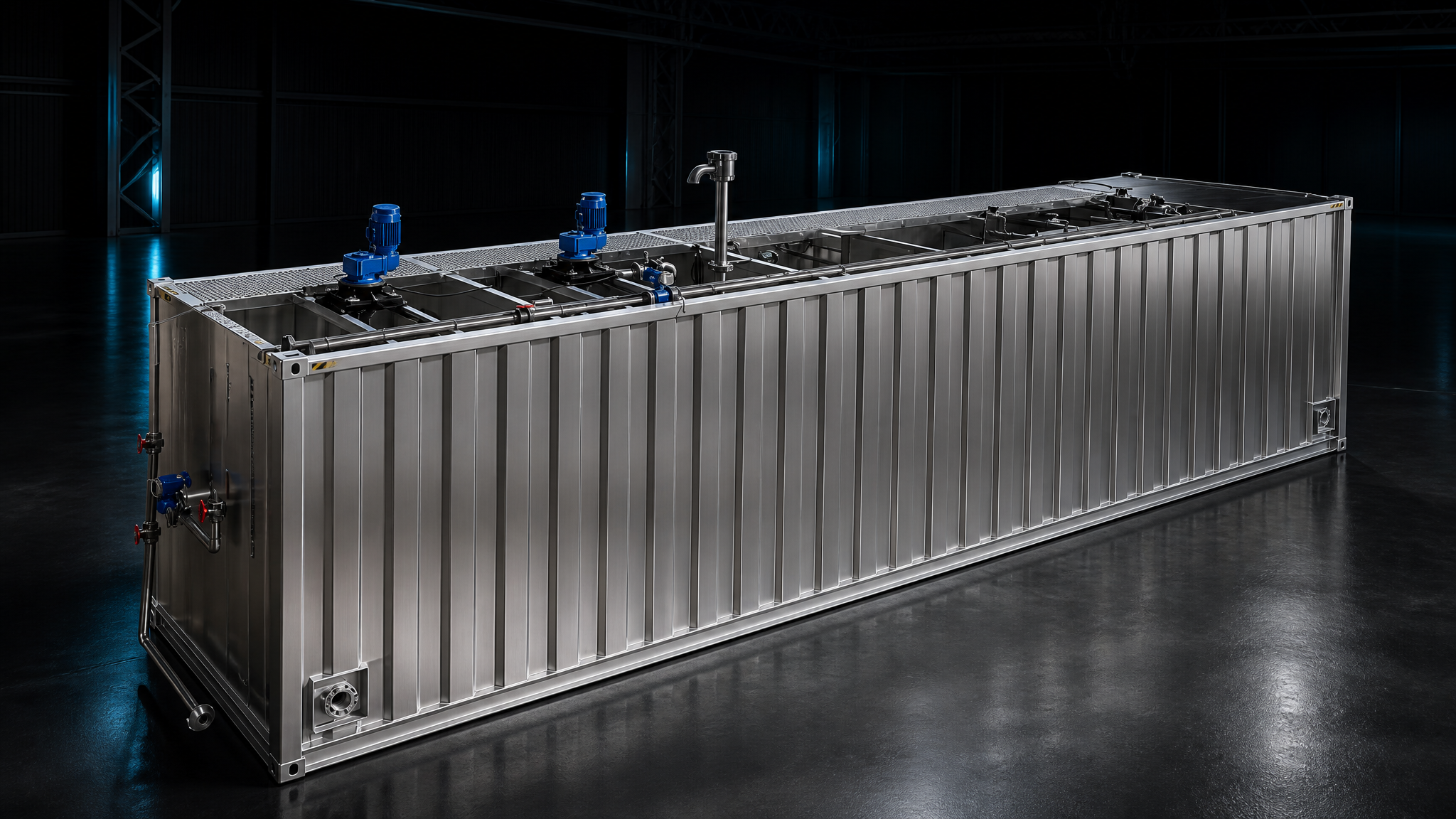
A moving bed biofilm reactor is often the most practical fix when winter nitrification becomes unreliable.
The advantage of the MBBR is not just more biology, but more stable biology.
Engineering Hub: get this sized for your plant
Describe your goal, effluent limit or sludge volume and receive a technology shortlist plus a sizing proposal – by email, no phone call required.
nitrification failure cold water temperature
When nitrification fails in cold water, the root cause is often a combination of slower microbial kinetics and insufficient reactor reserve.
The first diagnostic step is to separate temperature effects from process defects.
Operators should also check whether the system is carrying enough nitrifier inventory.
ammonia peaks in effluent winter
Ammonia peaks in effluent during winter are usually a symptom of process margin that was already too thin for cold conditions.
A useful way to interpret winter ammonia peaks is to compare daily trends rather than single samples.
An MBBR addresses this by increasing the protected attachment area available to nitrifiers.
MBBR nitrification low temperature
MBBR nitrification low temperature performance depends heavily on carrier filling ratio, aeration intensity, and the actual nitrogen load.
For cold-weather design, the carrier filling ratio should be selected with winter loading in mind, not only summer averages.
Cold water does not eliminate the need for careful control.
increase nitrification capacity without new tank
For plants that need to increase nitrification capacity without new tank construction, retrofitting an MBBR is often the most efficient path.
The design should start with the winter ammonia load, not the average annual load.
Before changing hardware, diagnose the actual failure mechanism.
How to size the MBBR for winter conditions
Winter sizing begins with load and temperature, then moves to retained biomass and oxygen supply.
A practical sizing review should include influent ammonia concentration, flow variability, basin volume, available aeration capacity, and target effluent limits.
The carrier filling ratio should be chosen as part of a broader performance strategy.
Root-cause diagnosis: temperature, sludge age, or inhibition?
The fastest way to diagnose winter nitrification failure is to separate three likely causes: temperature limitation, insufficient sludge age, and inhibition.
If sludge age is too short, the system may not retain enough nitrifiers even if the temperature is only moderately low.
The diagnosis should be based on trends, not only snapshots.
Practical takeaways for plant operators
If winter ammonia peaks are becoming routine, the plant likely needs more nitrification reserve.
The key is to treat winter performance as a design condition, not an exception.
Engineering Hub: get this sized for your plant
Describe your goal, effluent limit or sludge volume and receive a technology shortlist plus a sizing proposal – by email, no phone call required.