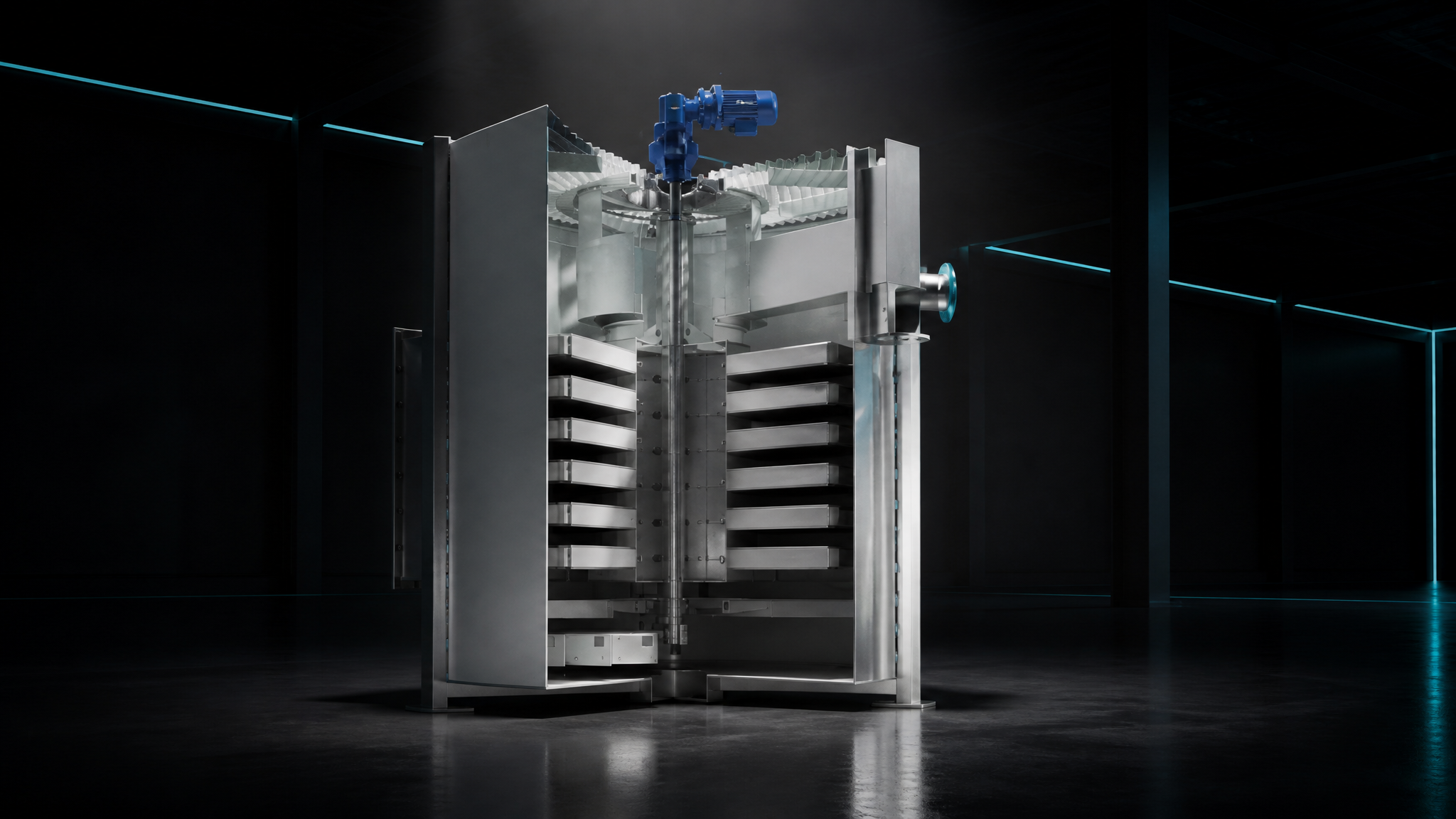
Engineering Hub: get this sized for your plant
Describe your goal, effluent limit or sludge volume and receive a technology shortlist plus a sizing proposal – by email, no phone call required.
Replacing Sand Filters with Pile Cloth Media: Total Cost of Ownership and Retrofit Decision Framework
For facilities operating conventional sand filters, the combination of high energy consumption, excessive backwash water usage, and space constraints often triggers the search for alternatives. Pile cloth media disc filters have emerged as a compelling retrofit option, but the decision requires rigorous financial analysis beyond simple capital cost comparison.
Understanding the True Cost Gap Between Sand and Cloth Media Filtration
Sand filters create hidden costs that accumulate significantly over a 20-year lifecycle: continuous pumping energy to overcome headloss, substantial backwash water volumes requiring retreatment, and the physical footprint that limits plant expansion. Pile cloth media disc filters capture particles on the cloth surface rather than through depth filtration, resulting in lower headloss, reduced backwash requirements, and a footprint typically 25–50% of equivalent sand filter area.
Comparison: Sand Filter vs Pile Cloth Media Disc Filter
- Footprint
- Sand filter: 2–4× larger
- Energy
- Sand filter: 0.05–0.15 kWh/m³ vs. cloth: 0.01–0.04 kWh/m³
- Backwash water
- Sand filter: 3–8% vs. cloth: 0.5–2% of throughput
- Headloss
- Sand filter: 0.5–2.0 m vs. cloth: 0.1–0.5 m
Total Cost of Ownership: A Lifecycle Calculation Framework
Evaluating a sand filter replacement requires analyzing costs across five categories over the expected equipment lifetime, typically 20-25 years for major filtration assets.
Energy Consumption
Energy is the most significant ongoing operational expense. A facility treating 10,000 m³/day with sand filters at 0.10 kWh/m³ and €0.12/kWh spends approximately €43,800 annually on filtration energy. Pile cloth media disc filters at 0.025 kWh/m³ reduce this to €10,950 annually—a saving of €32,850 per year.
Backwash Water Loss
Backwash water must be returned to the treatment process, effectively increasing plant hydraulic loading and chemical consumption. Sand filters typically consume 3-8% of throughput for backwashing, while pile cloth media systems require only 0.5-2%. For a 10,000 m³/day plant, reducing backwash from 5% to 1% recovers 400 m³/day of treatment capacity—equivalent to expanding plant capacity by 4% without additional biological treatment infrastructure.
Maintenance Labor and Downtime
Sand filters require regular inspection of underdrain systems, media leveling, and periodic complete media replacement. Pile cloth media disc filters concentrate maintenance on cloth panel replacement and drive mechanism service, typically requiring fewer total maintenance hours annually. However, cloth replacement occurs more frequently than sand media replacement, creating a different maintenance rhythm.
Footprint and Opportunity Cost
Space constraints often represent the most compelling driver for retrofit. The 50–75% footprint reduction achievable with pile cloth media disc filters can enable capacity increases within existing structures. The opportunity cost of land should be factored into TCO calculations for space-constrained sites.
| Cost Category | Sand Filter | Pile Cloth Media Disc Filter |
|---|---|---|
| Energy (kWh/m³) | 0.05–0.15 | 0.01–0.04 |
| Backwash water loss | 3–8% | 0.5–2% |
| Media replacement | Every 10–15 years | Every 7–12 years |
| Maintenance hours/year | High | Low to moderate |
Low Energy Tertiary Filter Retrofit: Technical Considerations
Retrofitting existing sand filter basins with pile cloth media disc filter modules offers potential capital cost savings compared to complete new construction. The existing concrete structure, inlet/outlet piping, and backwash infrastructure may be adaptable, though modifications are typically required.
Critical retrofit assessment factors include basin depth (pile cloth media disc filters require adequate submergence), structural capacity to support disc modules and drive mechanisms, and compatibility of existing backwash systems with cloth filter requirements. Backwash pumps sized for high-volume sand filter cleaning may require control modifications to deliver the lower volumes and different pressure profiles needed for cloth media cleaning.
Retrofit Tip
Before committing to a retrofit approach, conduct a structural assessment of existing sand filter basins to verify they can accommodate the concentrated loads from disc filter modules and drive equipment. Basin depth must provide adequate submergence for the disc assemblies, typically requiring 3.5-4.5 meters of water depth. Existing basins shallower than required may necessitate new construction rather than retrofit.
Structured Decision Framework for Plant Managers
The retrofit decision requires systematic evaluation across technical, financial, and operational dimensions. Plant managers should work through a comprehensive checklist before proceeding.
Retrofit Decision Checklist
- Calculate 20-year TCO including energy, backwash water, maintenance labor, media replacement, and opportunity costs for both technologies
- Assess whether existing basin structures can accommodate pile cloth media disc filter modules or if new construction is required
- Evaluate current and projected effluent quality requirements to ensure cloth filtration meets regulatory standards
- Quantify space constraints and determine whether footprint reduction enables future plant expansion
- Analyze backwash water handling capacity and determine if reduced backwash volumes provide operational benefits
- Review maintenance staff capabilities and training requirements for transitioning to cloth media technology
Making the Financial Case
For many facilities, the combination of 60–75% energy reduction, 50–80% backwash water savings, and 50–75% footprint reduction creates compelling economics even when capital costs exceed sand filter rehabilitation. The decision is particularly clear when space constraints would otherwise require off-site expansion or when energy costs are high.
How does pile cloth media filtration compare to sand filtration in terms of footprint and energy?+
Pile cloth media disc filters typically require 50-75% less footprint than equivalent sand filters, occupying 2-4 times less space. Energy consumption is similarly reduced, with cloth filters consuming 0.01-0.04 kWh/m³ compared to 0.05-0.15 kWh/m³ for sand filters. This represents potential energy savings of 60-75% depending on specific operating conditions and headloss profiles.
What backwash water consumption can I expect from a pile cloth media disc filter compared to a sand filter?+
Pile cloth media disc filters consume significantly less backwash water than sand filters. Typical backwash consumption for cloth filters ranges from 0.5-2% of throughput, while sand filters require 3-8% of throughput for effective cleaning. For a 10,000 m³/day facility, this translates to backwash volumes of 50-200 m³/day for cloth versus 300-800 m³/day for sand—a reduction of 75-90% in backwash water requiring retreatment.
How do I evaluate whether replacing my sand filters with pile cloth media disc filters makes financial sense?+
Conduct a total cost of ownership analysis over 20–25 years covering energy (kWh/m³ difference × annual flow × energy rate), backwash water retreatment costs, maintenance labour, media replacement, and footprint opportunity costs. For most facilities treating over 5,000 m³/day with energy costs above €0.10/kWh, the payback period for a retrofit is typically 5–10 years.
Equipment we supply for this
Engineering Hub: get this sized for your plant
Describe your goal, effluent limit or sludge volume and receive a technology shortlist plus a sizing proposal – by email, no phone call required.