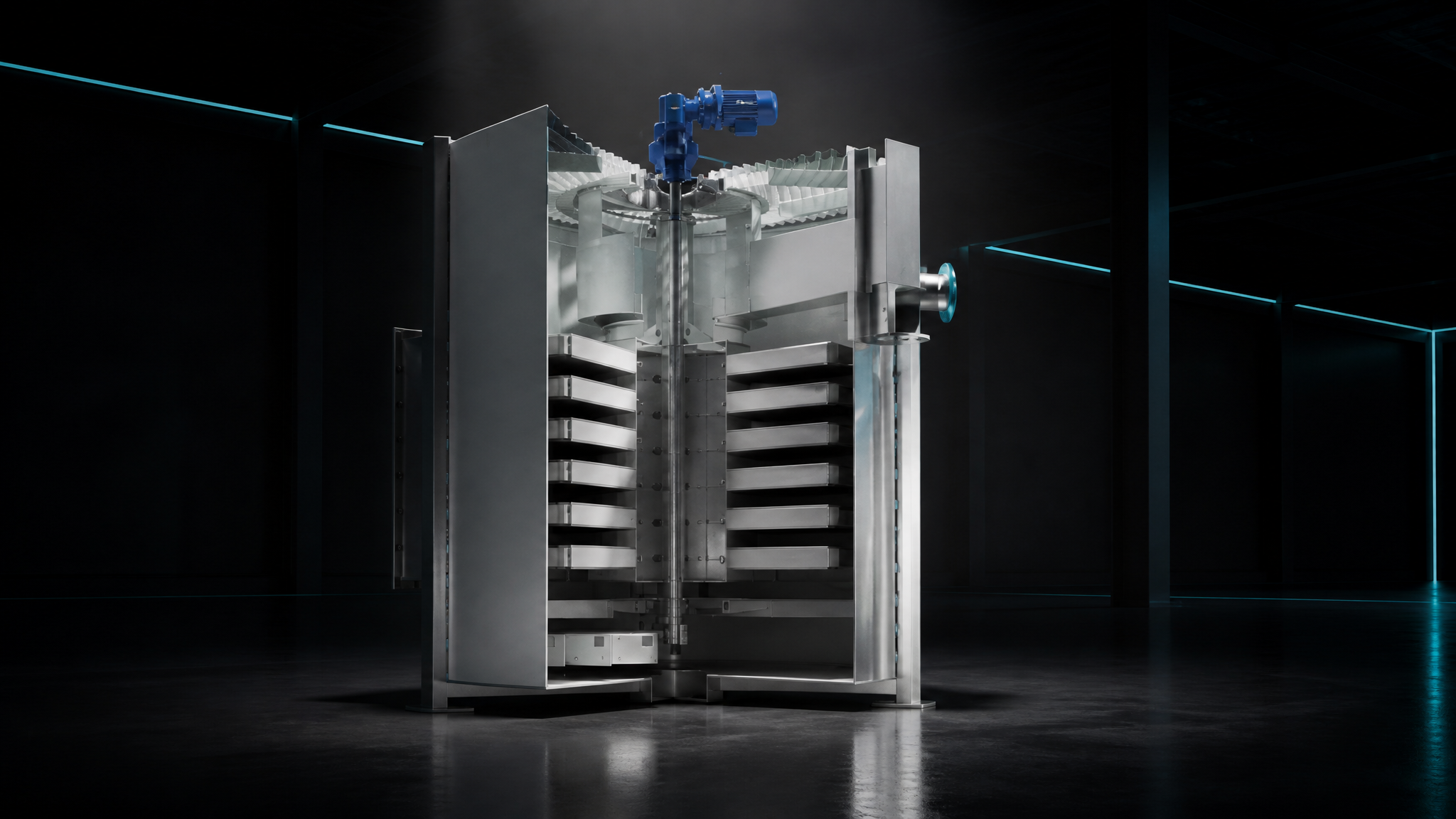
Key facts
- Metric
- Typical retrofit implication
- Footprint
- Cloth media filters can often deliver the same tertiary capacity in a smaller installation envelope than gravity sand filters.
- Energy use
- Lower hydraulic losses and less intensive backwashing can reduce operating energy demand.
- Backwash demand
- Backwash water volumes are commonly lower, which can ease recycle loading and reduce pumping costs.
- Retrofit fit
- The strongest business case appears where backwash, energy, and space constraints all exist together.
For plants facing aging tertiary sand filters, the decision to replace is usually not about filtration theory. It is about total cost of ownership, space available for modernization, and the operational burden of keeping the filter stable under variable inflow and solids loading.
A sand filter may still deliver acceptable effluent, but constant backwashing is often a sign that the filter is working too hard for current conditions. High backwash frequency means more pump runtime, more process interruptions, more wash water, and more wear on valves and ancillary equipment. If the site has no spare footprint for larger beds or additional cells, a retrofit to pile cloth media filtration can become a practical alternative.
Engineering Hub: get this sized for your plant
Describe your goal, effluent limit or sludge volume and receive a technology shortlist plus a sizing proposal – by email, no phone call required.
Pile cloth media filter vs sand filter: what changes financially?
A pile cloth media filter vs sand filter comparison should start with the cost items that matter over 10 to 20 years, not only the purchase price. In many wastewater plants, the major cost drivers are:
- electricity for filtration and backwash pumping
- wash water production and handling
- replacement media and wear parts
- maintenance labor and shutdown losses
- civil works needed to enlarge or duplicate the filter line
Sand filters often require substantial backwashing to avoid headloss build-up and solids breakthrough. That means more energy and more water recirculated through the plant. Pile cloth media filtration uses a different separation mechanism, which can lower the backwash intensity and reduce the footprint required for the same duty, especially in retrofit projects where the original tank structure can be reused.
When does replacing a sand filter wastewater treatment line make financial sense?
Replacing a sand filter in wastewater treatment makes financial sense when at least two of the following are true:
- Backwash frequency is high enough that it materially increases pumping and labor costs.
- The plant is approaching hydraulic or spatial limits and cannot easily add new sand filter cells.
- Energy costs are significant enough that lower-pressure filtration has a measurable payback.
- Wash water recovery or disposal is becoming a bottleneck.
- The existing sand filter requires major refurbishment, media replacement, or structural repair.
A retrofit is often attractive when the remaining life of the current sand system is limited and the next major intervention would already be costly. In that case, the owner can compare the cost of refurbishing an inefficient asset against the cost of converting to a lower-energy tertiary filtration concept.
Engineering decision framework for a low energy tertiary filter retrofit
A low energy tertiary filter retrofit should be evaluated by characterising the current duty, quantifying the total operating burden, checking spatial constraints, matching the target effluent standard, comparing life-cycle cost scenarios, and validating hydraulic integration. The checklist below covers the key steps.
backwash water consumption cloth filter: what should you expect?
Backwash water consumption in cloth media disc filter systems is typically a small fraction of the treated flow, and the backwash water is usually returned to the head of the plant. In retrofit assessments, engineers commonly model a reduction in wash water use of 30% to 70% compared with an overloaded sand system, though actual performance must be confirmed by design data and pilot testing.
The same caution applies to energy. A well-matched cloth media disc filter or horizontal cloth filter can reduce filtration energy compared with a heavily backwashed sand system, but the saving depends on the specific duty, pump configuration and control strategy.
30% to 70%
Typical modeled reduction in wash water demand versus an overloaded sand filter, depending on site conditions
10 to 20 years
Common life-cycle evaluation horizon for a tertiary filter replacement decision
2 to 5 major cost drivers
Energy, wash water, maintenance, and civil works typically dominate TCO
Retrofit note
A successful retrofit is rarely a simple like-for-like swap. The most reliable projects begin with a hydraulic survey, verified solids data, and a clear comparison of present operating cost against the cost of refurbishment or replacement.
Retrofit evaluation checklist
- Confirm actual backwash frequency, duration, and water use from operating logs.
- Measure peak and average influent solids and turbidity for at least one representative cycle.
- Check available footprint, maintenance access, and structural loading.
- Compare keep/refurbish/replace scenarios on a 10-year and 15-year basis.
- Verify hydraulic compatibility with inlet, outlet, bypass, and washwater systems.
- Test whether pile cloth media filtration can meet the required effluent limit under peak load.
What is the first step when we want to replace sand filters with pile cloth media?+
Start with a site audit: actual flow, solids loading, backwash logs, energy use, and available space. Without that baseline, the economic comparison is unreliable.
How do I know if a low energy tertiary filter retrofit will pay back?+
Model the annual savings from lower backwash water, pumping energy, and maintenance against capital cost. Payback is most convincing where the sand filter is already costly to operate or nearing refurbishment.
Is backwash water consumption cloth filter performance always lower than sand filtration?+
Not automatically, but it is often lower in a properly sized retrofit. Final consumption depends on influent quality, cleaning logic, and the hydraulic design of the plant.
Equipment we supply for this
Pile Cloth Media Disc Filter
Vertical and horizontal cloth filters for tertiary filtration
Technical dataHorizontal Pile Cloth Disc Filter
Horizontal design for high flow rates and easy maintenance access
Technical dataPile Cloth Media Disc Filter
Vertical and horizontal cloth filters for tertiary filtration
Technical dataHorizontal Pile Cloth Disc Filter
Horizontal design for high flow rates and easy maintenance access
Technical dataEngineering Hub: get this sized for your plant
Describe your goal, effluent limit or sludge volume and receive a technology shortlist plus a sizing proposal – by email, no phone call required.