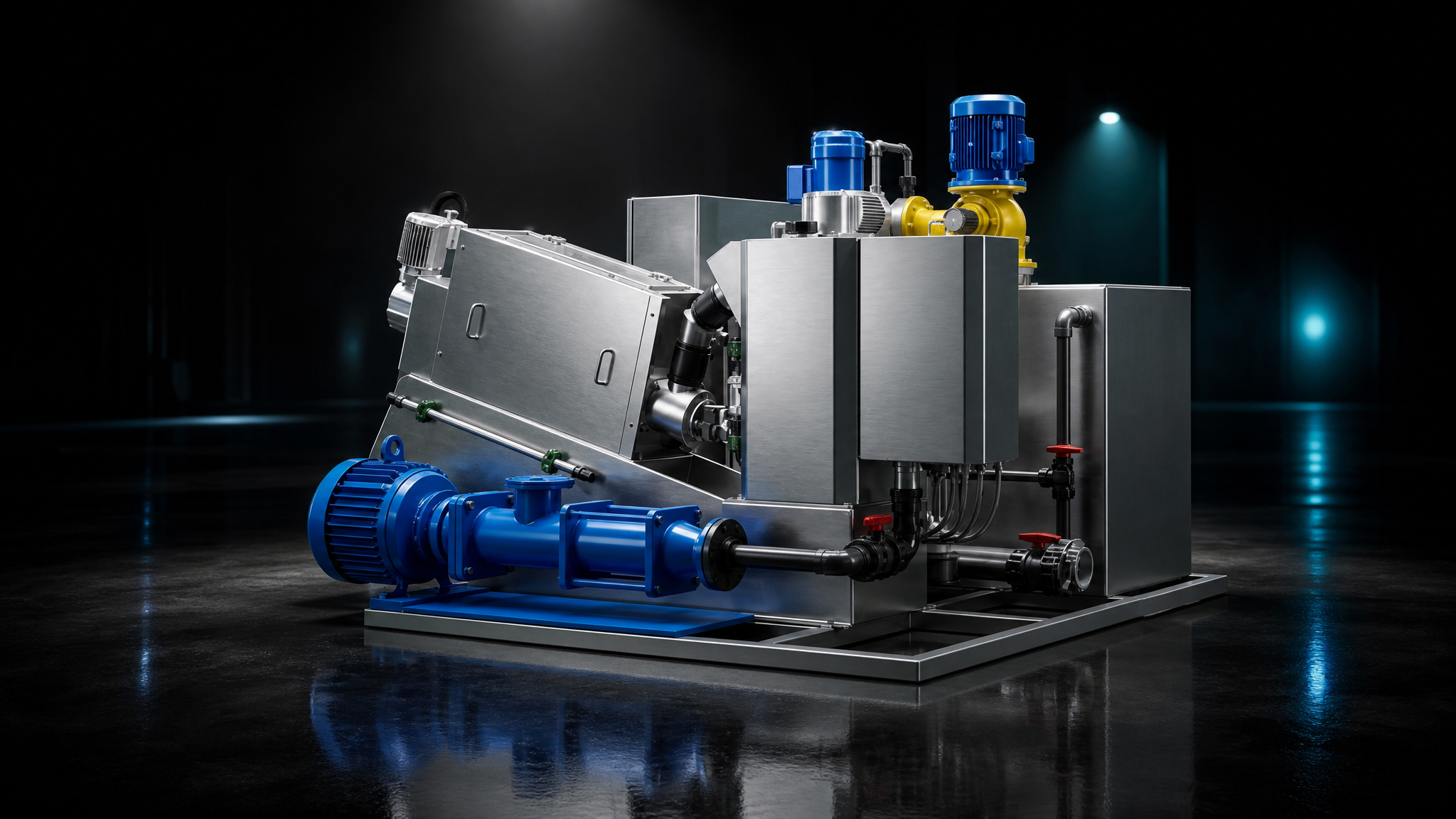
Engineering Hub: get this sized for your plant
Describe your goal, effluent limit or sludge volume and receive a technology shortlist plus a sizing proposal – by email, no phone call required.
Why Dewater Sludge?
For many operators, the disposal of sewage sludge is the largest cost driver. Effective dewatering can reduce sludge volume by up to 80%, resulting in a significant decrease in transport and disposal costs.
Screw Press vs Other Technologies
- Energy consumption: 0.03–0.1 kWh/m³ (centrifuge: 1–4 kWh/m³)
- Maintenance: Minimal, thanks to slow rotational speed (0.5–3 rpm)
- Noise: <65 dB (centrifuge: >80 dB)
- Personnel: Fully automated 24/7 operation possible
Dry Solids Contents Achieved
Depending on the type of sludge, the following dry solids (DS) contents are attainable:
- Municipal excess sludge: 18–22%
- Mixed sludge: 22–28%
- Industrial sludge: 25–35%
- Flotation sludge: 15–20%
Polymer Conditioning
For optimal results, the sludge must be conditioned with polymer. Proper polymer selection and dosing are critical to ensure:
- Good flocculation and dewaterability
- Clear filtrate
- Minimal polymer consumption
- Optimum dry solids content