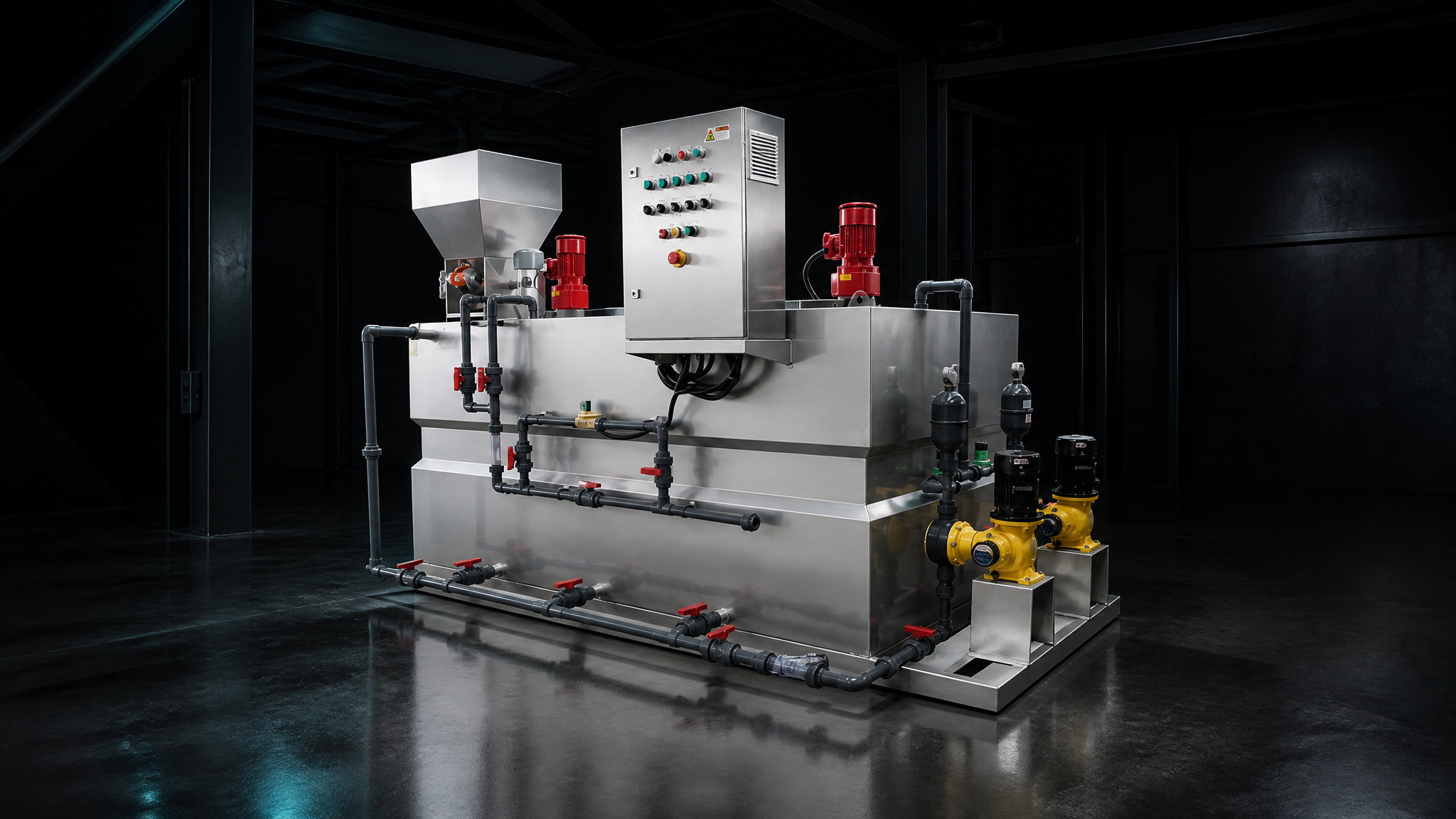
Polymer consumption that steadily drifts above the design figure is a common sign of a conditioning problem, not just a procurement problem. In most plants, the root cause sits somewhere in the preparation and application chain, where small deviations can multiply into large dose increases.
Engineering Hub: get this sized for your plant
Describe your goal, effluent limit or sludge volume and receive a technology shortlist plus a sizing proposal – by email, no phone call required.
Start with a structured root-cause check
Before changing product grade or increasing dose again, isolate the four most common drivers of overconsumption:
Root-cause map
- Symptom
- Likely cause
- High dose with weak floc
- Incorrect make-up concentration
- Good floc at low flow, poor at peaks
- Insufficient maturation time
- Good jar test, poor dewatering in operation
- Incorrect dosing point
- Dose changes track sludge changes
- Sludge variability
Diagnose in the right order
The fastest path is to start with preparation quality, then maturation, then dosing location, and only then sludge chemistry. That sequence avoids masking a basic preparation fault with higher chemical use.
| Check | What to measure |
|---|---|
| Make-up concentration | Actual polymer concentration versus recipe |
| Maturation time | Residence time before dosing |
| Dosing point | Shear, contact quality, and injection location |
| Sludge variability | Dry solids, pH, temperature, and feed changes |
Do not assume a higher dose means the polymer is “bad.” In many cases, the plant is asking the polymer to compensate for incomplete activation, poor injection, or changing sludge characteristics. Chasing the number without checking the process often locks in the overconsumption.
A practical field routine
What operators should look at first
- Is the make-up tank producing a stable solution within the target concentration?
- Is the polymer given enough time to mature before it reaches the process?
- Is the injection point exposing it to the right mixing intensity?
- Did the sludge properties change since the last stable operating period?
What engineers should verify
- Flow meters on make-up water and polymer feed
- Tank geometry, mixer speed, and residence time
- Injection lance position and pipe hydraulics
- Upstream process records and sludge solids trends
- 1Verify recipe and meter accuracy
- 2Check maturation time and tank hydraulics
- 3Inspect dosing point and local shear
- 4Correlate consumption with sludge variability
FAQ
Why does polymer consumption rise suddenly after a stable period?+
A sudden rise usually points to a process change rather than a gradual chemical loss. The first checks should be make-up concentration, maturation time, and a recent change in sludge characteristics.
Can a jar test miss the real problem?+
Yes. A jar test may show the polymer can work under ideal mixing, while the plant still overconsumes because the preparation, residence time, or injection point is wrong.
Should we change polymer grade before fixing the process?+
Usually no. If the preparation and dosing chain is not correct, a different grade may only hide the root cause and increase total cost.
Equipment we supply for this
Engineering Hub: get this sized for your plant
Describe your goal, effluent limit or sludge volume and receive a technology shortlist plus a sizing proposal – by email, no phone call required.