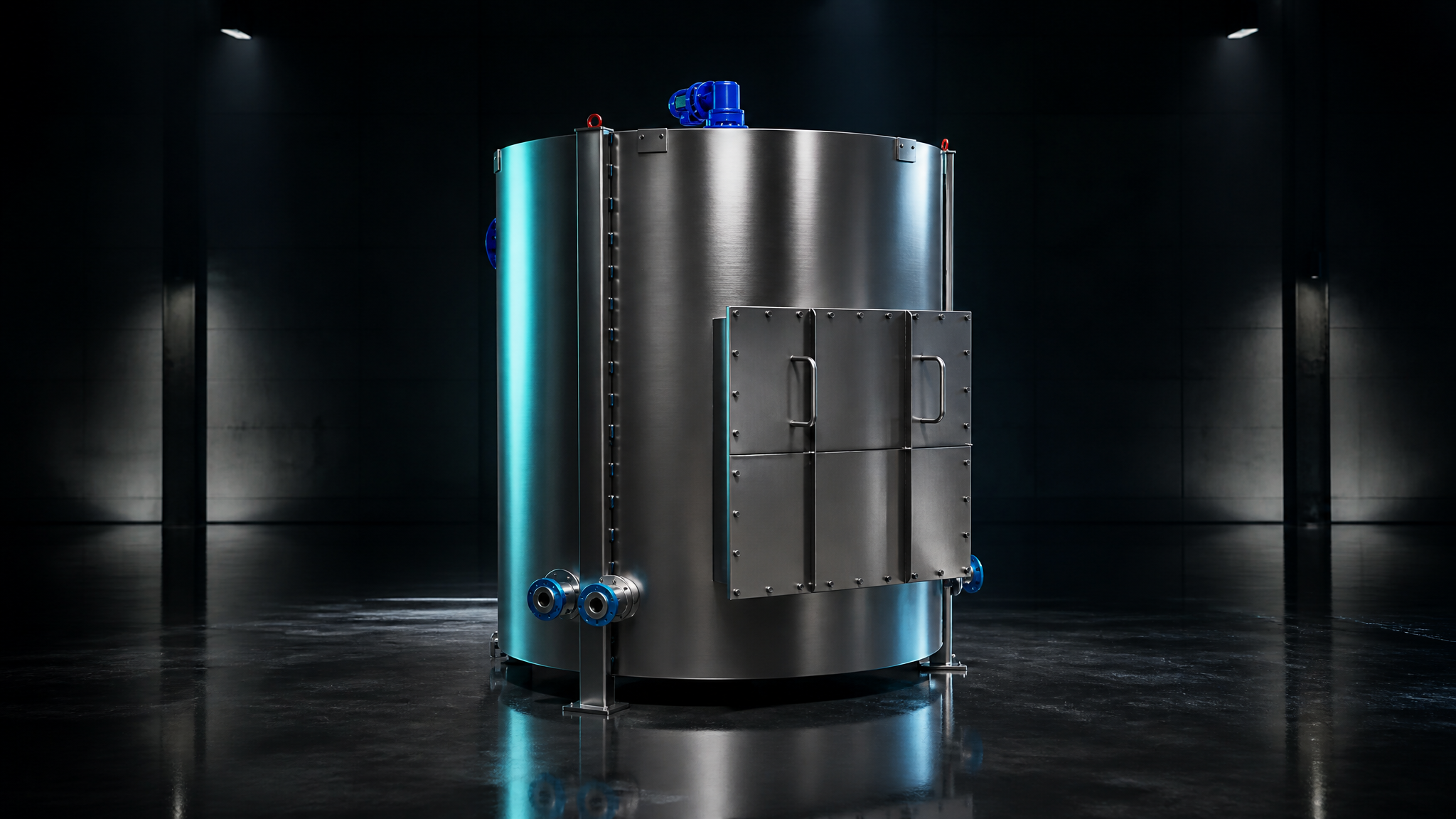
Industrial water reuse turns treated wastewater from a disposal cost into a resource. Whether the reclaimed water is used for cooling, cleaning, irrigation or process make-up, the design question is always the same: which quality does the end use require, and which treatment train delivers it reliably at an acceptable cost per cubic metre?
This guide explains the regulatory framework, typical quality classes, the treatment steps that are usually needed after biological treatment, monitoring requirements and the economic logic behind a reuse project. All figures are typical design ranges; the actual values must be derived from site-specific water analyses.
Industrial Water Reuse at a Glance
- Typical feed
- Biologically treated effluent or pretreated process water
- Key quality drivers
- TSS, turbidity, microbiology, salinity
- Core treatment steps
- Filtration, disinfection, storage, optional desalination
- Typical filtrate TSS after cloth filtration
- 1–5 mg/L
- Typical turbidity after filtration
- < 2–5 NTU
Engineering Hub: get this sized for your plant
Describe your goal, effluent limit or sludge volume and receive a technology shortlist plus a sizing proposal – by email, no phone call required.
Regulatory Framework: EU Regulation 2020/741
In the European Union, Regulation (EU) 2020/741 sets minimum requirements for water reuse in agricultural irrigation. Although it addresses reclaimed municipal wastewater, its quality classes have become a common reference point for industrial reuse concepts as well, especially where water leaves the site or comes into contact with crops, people or the environment.
The regulation defines four reclaimed water quality classes (A to D). Each class is linked to permitted crop categories and irrigation methods, and each requires a risk management plan covering hazards, barriers and monitoring.
| Class | E. coli (cfu/100 mL) | BOD5 (mg/L) | TSS (mg/L) | Turbidity (NTU) | Typical treatment |
|---|---|---|---|---|---|
| A | ≤ 10 | ≤ 10 | ≤ 10 | ≤ 5 | Secondary treatment, filtration, disinfection |
| B | ≤ 100 | per Directive 91/271/EEC | per Directive 91/271/EEC | – | Secondary treatment, disinfection |
| C | ≤ 1,000 | per Directive 91/271/EEC | per Directive 91/271/EEC | – | Secondary treatment, disinfection |
| D | ≤ 10,000 | per Directive 91/271/EEC | per Directive 91/271/EEC | – | Secondary treatment, disinfection |
For purely internal industrial uses (cooling towers, washing, process water), requirements are usually defined by the site operator, equipment manufacturers and the competent authority. In practice, the Class A parameters for TSS and turbidity are often used as a robust baseline.
Defining the Target Quality for Each End Use
A reuse concept should start with the end user, not with the treatment technology. Different applications tolerate very different water qualities:
- Cooling water make-up: low TSS and turbidity to avoid deposits, limits for hardness, chloride and nutrients to control scaling, corrosion and biofouling.
- Cleaning and washing water: low solids and safe microbiology; requirements depend on whether there is product contact.
- Irrigation of green areas or crops: microbiological class according to crop and irrigation method, plus salinity and sodium limits.
- Process make-up water: often the strictest requirements; frequently needs partial desalination by reverse osmosis.
The detailed requirements for irrigation are covered in our article on effluent quality for irrigation reuse.
The Typical Treatment Train
Most industrial reuse schemes build on an existing biological treatment stage and add several barriers:
Typical Reuse Treatment Train
- 1Biological treatment: removal of organics and nutrients, stable nitrification as basis for all following steps.
- 2Tertiary filtration: removal of suspended solids and particle-bound pollutants, typically by pile cloth media filtration.
- 3Optional chemical polishing: coagulant dosing ahead of the filter for phosphorus or colloid removal.
- 4Disinfection: UV, ozone or chlorination, sized on the filtered water quality.
- 5Storage and distribution: buffer tanks, recirculation and residual disinfection to keep quality stable.
- 6Optional desalination: reverse osmosis for applications with low salt limits.
Why Filtration Is the Key Barrier
Filtration is the step that makes every downstream barrier work. Suspended solids shield microorganisms from UV light, consume disinfectant and cause fouling in membranes and heat exchangers.
- UV disinfection: reliable UV dose delivery requires low turbidity and high UV transmittance. Particles above a few micrometres can protect bacteria from irradiation.
- Chlorination: solids increase chlorine demand and the formation of by-products.
- Reverse osmosis: a low silt density index (SDI) is essential; tertiary filtration reduces the load on any downstream fine filtration or ultrafiltration.
Pile cloth media filtration is well suited for this task because it achieves low filtrate TSS at high hydraulic loading on a compact footprint, with backwash water fractions typically in the range of 0.5–2 % of the filtrate flow.
| Parameter | Filter feed (secondary effluent) | Filtrate (pile cloth media filtration) |
|---|---|---|
| TSS | 5–30 mg/L | 1–5 mg/L |
| Turbidity | 3–15 NTU | < 2–5 NTU |
| Total phosphorus (with coagulant) | 0.5–2 mg/L | 0.1–0.3 mg/L |
Monitoring and Risk Management
Reclaimed water must be safe at the point of use, not only at the plant outlet. A robust monitoring concept combines online measurements with laboratory analyses:
- Online: turbidity after filtration, UV transmittance, UV dose or residual chlorine, flow and storage tank levels.
- Laboratory: E. coli and other indicator organisms, BOD5, TSS, salinity, nutrients, depending on end use.
- Barrier logic: automatic diversion or recirculation if turbidity or disinfection parameters leave the permitted range.
- Documentation: a risk management plan describing hazards, barriers, critical limits and corrective actions.
Design Checklist for a Reuse Plant
- Define end uses, volumes and daily demand profiles
- Collect at least several weeks of effluent data including peaks
- Agree target quality and monitoring with the authority and end users
- Plan storage volume to decouple production and demand
- Provide redundancy for filtration and disinfection
- Define diversion routes for off-spec water
- Plan handling of backwash water and concentrates
Economics: When Does Reuse Pay Off?
The business case depends on the avoided costs: fresh water purchase, groundwater fees, wastewater discharge charges and, increasingly, the risk of supply restrictions during droughts. Treatment costs for filtration and UV disinfection are usually moderate; desalination by reverse osmosis increases energy demand and creates a concentrate stream that must be managed.
A structured approach to costs, savings and risks is described in our article on building a defensible water reuse business case. Operating cost items are broken down in operating cost per cubic metre.
Pilot trials reduce risk
Where effluent quality varies strongly, a pilot trial with a filter unit on site provides reliable data on achievable filtrate quality and backwash demand before the investment decision. See running a pilot trial.
Does EU Regulation 2020/741 apply to industrial water reuse?+
The regulation applies to reclaimed water used for agricultural irrigation. For internal industrial uses, requirements are defined by the operator and the competent authority, but the quality classes are often used as a reference.
Which quality class is most demanding?+
Class A, with E. coli ≤ 10 cfu/100 mL, BOD5 and TSS ≤ 10 mg/L and turbidity ≤ 5 NTU. It typically requires filtration and disinfection after biological treatment.
Why is filtration needed before UV disinfection?+
Suspended particles shield microorganisms from UV light and reduce UV transmittance. Low TSS and turbidity are required for reliable disinfection.
Which filtrate quality can pile cloth media filtration achieve?+
For biologically treated effluent, filtrate TSS is typically 1–5 mg/L and turbidity below 2–5 NTU, depending on feed quality and chemical conditioning.
Is reverse osmosis always necessary?+
No. It is only needed where salinity or specific ions must be reduced, for example for boiler feed or certain process uses. Many cooling, washing and irrigation applications work with filtration and disinfection.
How large should the storage tank be?+
Storage is sized on the difference between production and demand profiles; typically it covers several hours up to one day of demand, plus a reserve for maintenance periods.
Equipment we supply for this
Pile Cloth Media Disc Filter
Vertical and horizontal cloth filters for tertiary filtration
Technical dataVertical Pile Cloth Disc Filter
Compact vertical disc filter for tertiary treatment and water reuse
Technical dataHorizontal Pile Cloth Disc Filter
Horizontal design for high flow rates and easy maintenance access
Technical dataDosing Stations
Precise dosing of coagulants, flocculants and pH correction chemicals
Technical dataStainless Steel Tanks
Process, buffer and storage tanks built to your specification
Technical data