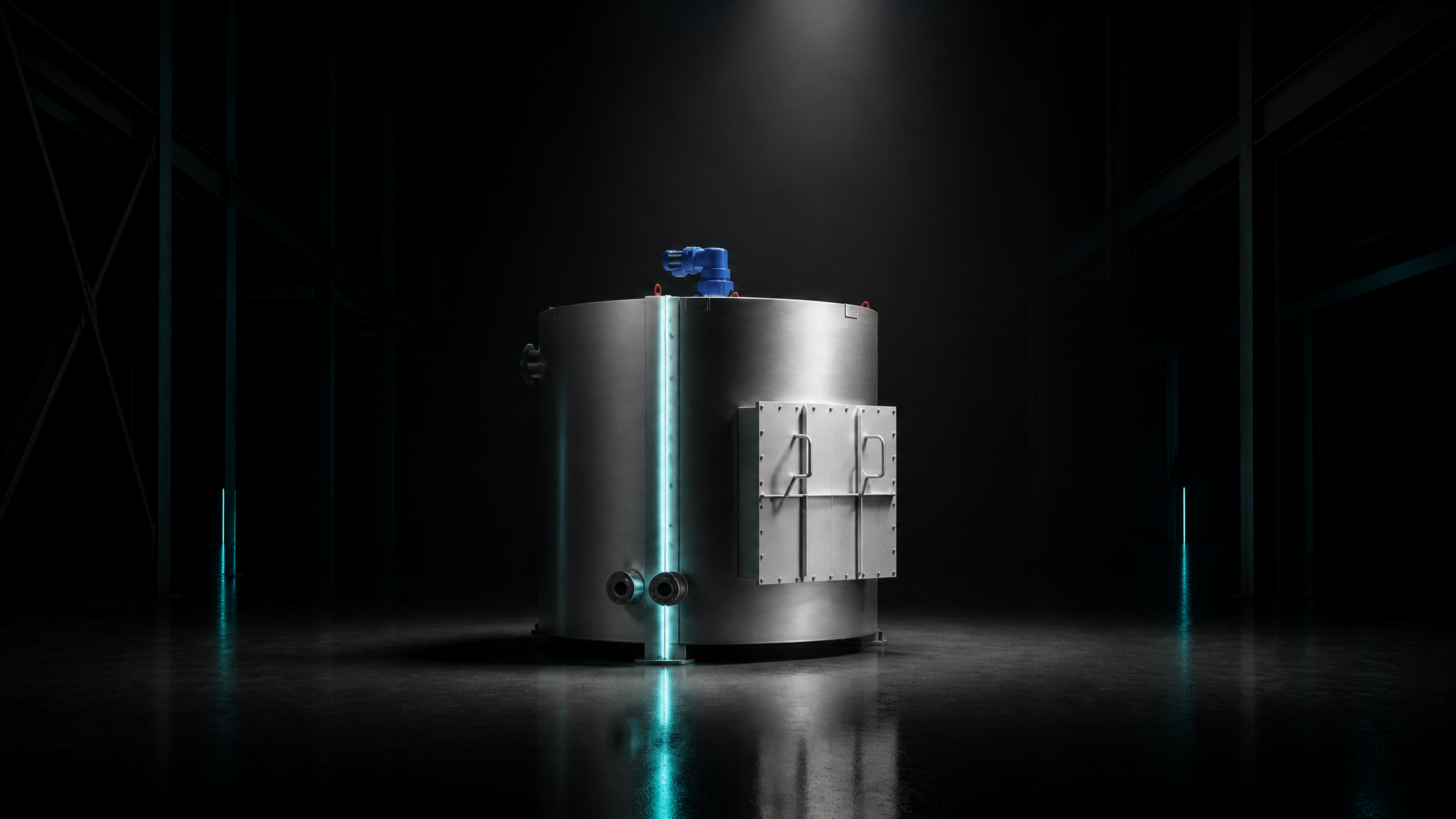
Sustaining 5 mg/l TSS compliance at peak flow
- Label
- Value
- Permit challenge
- Secondary clarification alone is often not stable enough for a 5 mg/l TSS limit
- Best-fit process role
- Tertiary filtration as a polishing barrier after biological treatment
- Core control focus
- Online TSS and turbidity trends, filter hydraulics, cloth condition, backwash performance
- Typical risk window
- Short hydraulic peaks, sludge carryover, seasonal load swings, and solids breakthrough
- Operational objective
- Maintain compliant final effluent continuously, not only during favorable operating conditions
Parameter Practical implication for compliance
--- ---
Influent TSS variability Higher variability increases the probability of short-term effluent excursions
Peak hydraulic loading Reduced residence time can stress clarification and increase load to tertiary filtration
Turbidity trend response Faster detection helps operators intervene before a permit exceedance is recorded
Backwash frequency Too low can allow fouling; too high can reduce effective filter capacity
Cloth condition Wear, blinding, or uneven cleaning can create unstable capture efficiency
Continuous online monitoring is most useful when it is treated as an operating tool, not just a compliance meter. TSS and turbidity signals can reveal drift in filter performance hours before laboratory results show a problem. If the trend begins to climb during peak flow, operators can adjust backwash intensity, inspect filter sections, or temporarily redistribute hydraulic load.
How to reduce TSS below 5 mg/l in final effluent starts with understanding where the last solids are entering the stream. In many plants, the answer is not a single “bigger filter,” but a more disciplined system approach:
- Verify whether peak exceedances originate in clarification, internal recirculation, or tertiary filtration.
- Use online turbidity and, where available, online TSS estimation to detect drift in real time.
- Set action thresholds below the permit limit so operators react before an excursion occurs.
- Review backwash intervals, wash-water quality, and solids removal effectiveness after hydraulic peaks.
- Inspect cloth media condition routinely for fouling, uneven wear, and loss of permeability.
- Record operational changes in a compliance log that links trends, interventions, and analytical results.
Engineering Hub: get this sized for your plant
Describe your goal, effluent limit or sludge volume and receive a technology shortlist plus a sizing proposal – by email, no phone call required.
online TSS monitoring tertiary filtration compliance
Online monitoring supports compliance only if the data is structured into an operating workflow. A useful setup combines a continuous turbidity signal with periodic laboratory TSS verification. Turbidity provides the fast trend, while lab data anchors the model and confirms whether the sensor remains representative of actual solids behavior.
pile cloth media filter operational fine-tuning
A pile cloth media disc filter can be very effective, but only when its hydraulics and cleaning regime are tuned to the specific effluent profile. Overly aggressive operation can reduce effective capacity, while overly conservative settings may allow solids accumulation and breakthrough.
Key fine-tuning variables include filtration rate, backwash trigger logic, wash cycle timing, and solids discharge consistency. Plants often improve stability by optimizing one variable at a time and documenting the effect on turbidity and TSS trends over several days or weeks. The goal is robust performance across variable conditions.
continuous turbidity monitoring discharge permit
A continuous turbidity monitoring discharge permit strategy is strongest when the monitoring point is located at the true final discharge and when the instrumentation is maintained as carefully as the filter itself. Calibration checks, sensor cleaning, and comparison against grab samples are essential to avoid false confidence. If the signal quality declines, compliance risk rises even if the process has not changed.
- 11. Establish a stable baseline with paired turbidity and laboratory TSS data.
- 22. Define operational thresholds below the 5 mg/l permit limit.
- 33. Tune filtration and backwash settings during representative peak-flow conditions.
- 44. Create a standard response procedure for rising turbidity or filter differential pressure.
- 55. Archive trend data, intervention logs, and analytical reports in a compliance-ready format.
- 66. Recheck settings seasonally or after major process changes.
How to reduce TSS below 5 mg/l in final effluent?+
Use tertiary filtration as a polishing step after secondary treatment, then optimize filter operation for peak-flow conditions. The most reliable result comes from combining a well-tuned pile cloth media filter with online turbidity monitoring and documented operator responses.
online TSS monitoring tertiary filtration compliance — what matters most?+
The key is data continuity and actionable thresholds. Online monitoring should be paired with laboratory verification, clear alarm levels, and a defined response workflow so the plant can prove compliance over time, not only at isolated sampling points.
pile cloth media filter operational fine-tuning — where should operators start?+
Start with backwash timing, filtration rate, and cloth condition. Then correlate changes with turbidity trends and laboratory TSS results during realistic hydraulic peaks to identify the settings that deliver stable performance.
Equipment we supply for this
Pile Cloth Media Disc Filter
Vertical and horizontal cloth filters for tertiary filtration
Technical dataVertical Pile Cloth Disc Filter
Compact vertical disc filter for tertiary treatment and water reuse
Technical dataPile Cloth Media Disc Filter
Vertical and horizontal cloth filters for tertiary filtration
Technical dataVertical Pile Cloth Disc Filter
Compact vertical disc filter for tertiary treatment and water reuse
Technical dataEngineering Hub: get this sized for your plant
Describe your goal, effluent limit or sludge volume and receive a technology shortlist plus a sizing proposal – by email, no phone call required.