Tertiary filtration
Tertiary treatment with cloth media filtration
Tertiary treatment is the polishing stage that removes the fine solids a secondary clarifier leaves behind. It is where a plant turns a mediocre effluent into one that meets a tight discharge consent, protects a receiving water or becomes fit for reuse.
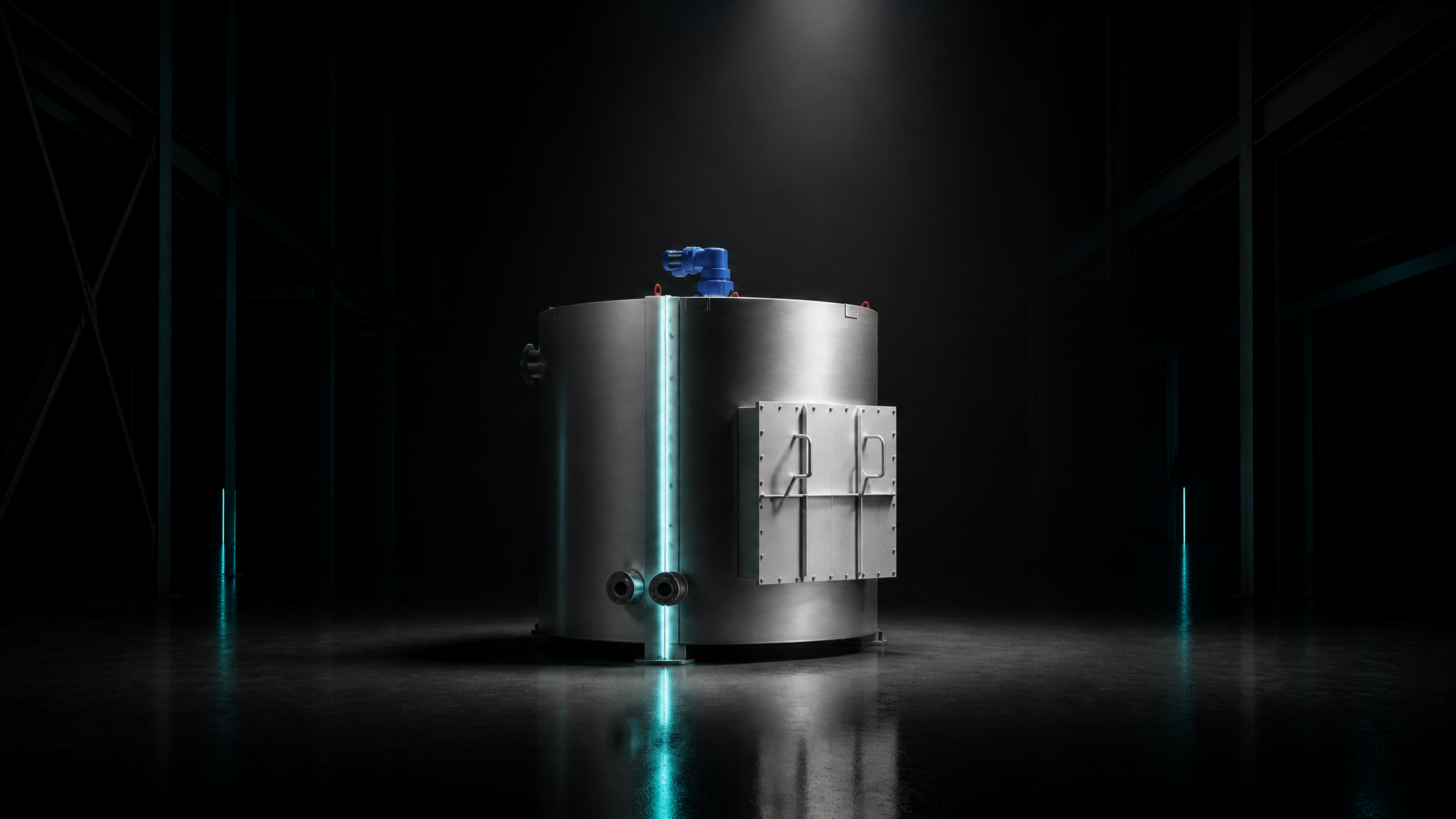
Pile cloth media filtration has become the reference technology for this stage. It works by drawing water from the outside to the inside of a rotating cloth-covered disc; solids are captured on the pile of the cloth and removed by periodic vacuum backwash. The result is a compact, low-headloss filter that fits into an existing basin far more easily than a sand filter.
In brief
Tertiary treatment is a final polishing step downstream of biological treatment that removes residual suspended solids and particle-bound phosphorus, typically to enable a tight discharge limit or water reuse.
The challenges this solves
Meeting tight TSS and phosphorus limits
Discharge consents increasingly demand single-digit TSS and low total phosphorus. Much of the remaining phosphorus is bound to fine particles, so a filtration step that captures those particles is the most direct route to compliance.
No room for new civil works
Most plants have to reach a new limit on the existing footprint. A retrofit filter that drops into an existing clarifier or channel avoids the cost and permitting of a new concrete structure.
Opening the door to water reuse
Irrigation and industrial reuse need a consistently clean, low-turbidity effluent. Reliable tertiary filtration is the enabling step that makes a reuse business case defensible.
Technologies we apply
Pile cloth media disc filter
The core technology for tertiary polishing: a series of cloth-covered discs in a tank, outside-to-inside flow, vacuum backwash. Low headloss, small footprint and a filtrate quality that is stable across load swings.
View equipmentVertical disc configuration
The standard arrangement where floor area is the scarce resource — the most filter area per square metre, and the natural choice for retrofits into existing clarifiers.
View equipmentHorizontal disc configuration
Used where building height is limited or the filter has to go into a shallow existing channel. Same cloth, same effluent quality — chosen purely on geometry.
View equipmentWhat is achievable
The figures below are typical design ranges for municipal and industrial polishing duties. Actual performance depends on upstream treatment, particle size distribution and chemical dosing, and is confirmed by a pilot trial.
| Parameter | Typical range |
|---|---|
| Effluent TSS | down to ~5 mg/l |
| Total phosphorus (with precipitation) | down to ~0.1–0.3 mg/l |
| Hydraulic loading per disc | up to ~50 m³/h |
| Filter area per disc | up to ~5 m² |
| Backwash water | typically ~1–2 % of throughput |
How we size it
Sizing a tertiary filter is driven by hydraulics and solids load, not by nameplate flow alone. The key inputs we need are:
Key sizing inputs
- Average and peak hydraulic flow
- Inlet TSS concentration and its variability
- Target effluent TSS and phosphorus limit
- Whether phosphorus precipitation is dosed upstream
- Available basin geometry for a retrofit
Rent or pilot first
Before committing to a permanent installation, a pilot or rental unit lets you confirm filtrate quality and backwash rates on your own water. It is the most reliable way to de-risk the sizing and the investment case.
Rent or pilot firstRelated reading
Frequently asked questions
How does cloth media filtration compare with sand filtration?
It achieves comparable effluent quality with far lower headloss, a smaller footprint and much less backwash water, which is why it is now the preferred retrofit technology for existing plants.
Can it remove phosphorus on its own?
It removes the particle-bound fraction directly. To reach very low total phosphorus, a precipitation step upstream converts dissolved phosphorus into filterable particles that the cloth then captures.
Does it fit into an existing clarifier?
Yes — that is one of its main advantages. The vertical disc configuration in particular is designed to drop into existing concrete structures without new civil works.
What effluent quality can I rely on for reuse?
A consistently low TSS and turbidity, which is the basis for irrigation and industrial reuse. The exact values are confirmed on your water in a pilot trial.
Engineering Hub: get this sized for your plant
Describe your goal, effluent limit or sludge volume and receive a technology shortlist plus a sizing proposal – by email, no phone call required.