Engineering Hub: get this sized for your plant
Describe your goal, effluent limit or sludge volume and receive a technology shortlist plus a sizing proposal – by email, no phone call required.
Sand Filter Replacement at a Glance
- Label
- Value
- ---
- ---
- Typical footprint reduction
- about 40% to 70% versus conventional sand filtration
- Typical energy reduction
- often 20% to 50% lower hydraulic and backwash-related energy demand
- Backwash water demand
- commonly reduced to roughly 0.2% to 1.0% of treated flow, depending on influent quality and duty cycle
- Maintenance profile
- fewer moving parts in the filtration stage, with service intervals typically measured in months rather than weekly media intervention
- Retrofit fit
- suitable where space is limited and existing concrete works should be reused
- TCO focus
- capex, civil works, energy, water loss, labour, downtime, and lifecycle maintenance
Replacing sand filters is rarely a question of filtration performance alone. For many plants, the real decision is whether the existing process still makes economic sense when all lifecycle costs are counted. If a sand filter trains constant backwashing, consumes significant pump energy, and occupies valuable land or structural space, a retrofit to pile cloth media filtration can be attractive. The right comparison is not only capital expenditure, but total cost of ownership over the full service life.
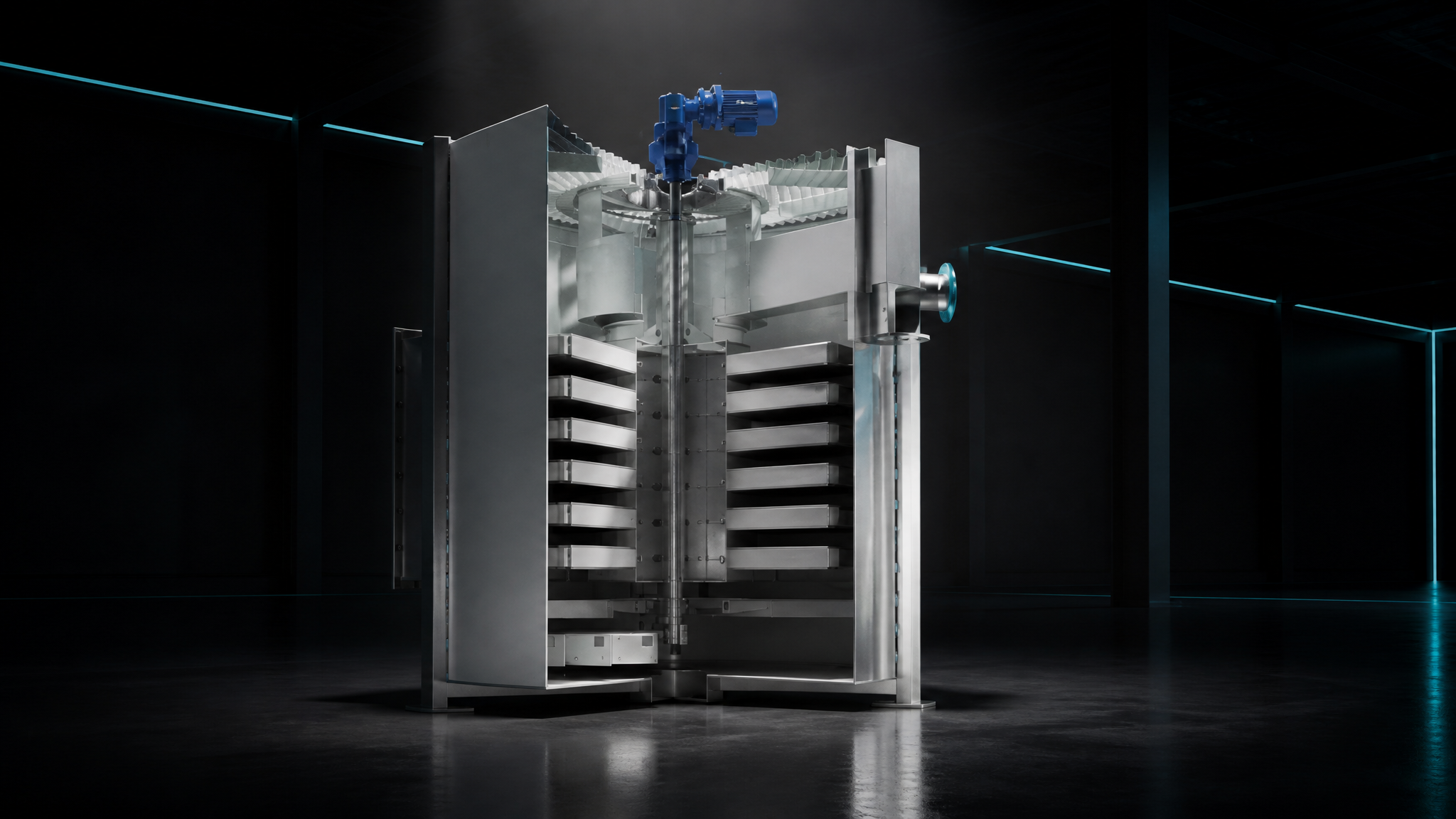
A TCO review should begin with the physical constraints. If there is no room to extend the filter battery, the usable footprint becomes a direct economic variable. Additional civil works, bypass piping, and temporary treatment during construction can quickly dominate project cost. In many retrofit cases, the ability to reuse parts of the existing channel, tank, or building envelope is a major advantage. A compact pile cloth media disc filter can often deliver the required treatment capacity within a smaller area, especially where the plant must upgrade within an existing boundary.
Maintenance should be compared in terms of frequency, labour, and risk. Sand filter maintenance may involve media inspections, nozzle checks, bed leveling, valve upkeep, and periodic rehabilitation of bed materials. Pile cloth media filtration shifts the maintenance profile toward mechanical inspection, cleaning elements, drive components, and seals. While no system is maintenance-free, the service pattern is often more predictable. For plant managers, the important question is not whether maintenance exists, but whether it can be scheduled during planned windows instead of emergency response.
A robust retrofit decision framework should compare the following cost categories:
- Capital cost: equipment, civil modifications, controls, installation, and commissioning.
- Footprint cost: the value of recovered space, avoided expansion, and reduced civil scope.
- Energy cost: filtration headloss, backwash pumping, ancillary equipment, and peak demand.
- Water cost: backwash consumption, recycle handling, and effects on plant hydraulics.
- Labour cost: routine inspection, cleaning, troubleshooting, and operator attention.
- Downtime cost: outage risk, bypass needs, and staged construction implications.
- Lifecycle cost: replacement parts, overhaul intervals, and end-of-life planning.
| Factor | Sand filter | Pile cloth media disc filter |
|---|---|---|
| Footprint | typically larger bed area and ancillary wash infrastructure | often 40% to 70% smaller footprint in retrofit applications |
| Backwash demand | higher and more frequent in many operating conditions | lower cleaning water demand, depending on solids load |
| Energy use | higher due to backwash pumping and headloss management | usually lower due to compact, low-head operation |
| Civil works | may require more space and structural modifications | often better suited to reuse of existing structures |
| Maintenance | media-related upkeep and more intensive wash system checks | mechanical inspection and cleaning element service |
| Operational flexibility | can be constrained by bed condition and backwash scheduling | generally easier to integrate into a compact tertiary stage |
| TCO outcome | can rise sharply when space and energy are costly | often favourable where retrofit and lifecycle costs dominate |
:::
Planning note
When evaluating retrofit feasibility, compare current annual costs against a 10- to 20-year lifecycle model. Include electricity, backwash losses, operator time, spare parts, instrumentation, and temporary bypass costs during installation. In many plants, these indirect costs are larger than the equipment price difference.
Retrofit decision checklist for plant managers
- Confirm current bottlenecks: backwashing frequency, headloss, energy use, and hydraulic constraints.
- Measure available retrofit space and identify any civil limits or structural restrictions.
- Quantify annual costs for power, water loss, labour, and maintenance on the existing sand filters.
- Estimate the cost of keeping the sand filters versus replacing them, including outage and bypass impacts.
- Compare expected footprint savings with the value of avoided expansion.
- Review backwash water recovery options and recycle handling capacity.
- Check whether the plant needs a compact vertical or horizontal layout.
- Request lifecycle cost estimates, not only purchase price quotations.
- Include operator access, cleaning intervals, and spare parts availability in the scoring.
- Validate the concept against peak flow, seasonal solids load, and future compliance targets.
When does replacing sand filters make economic sense?+
Replacement often makes sense when backwashing is frequent, energy costs are rising, maintenance is labour-intensive, or the plant has no room to expand. The strongest cases usually combine all four conditions.
Is a cloth filter always cheaper than keeping sand filters?+
Not always. The equipment price can be similar or even higher in some projects, but the lifecycle cost may still be lower because of smaller footprint, lower energy demand, and reduced backwash losses.
What should plant managers ask vendors for during evaluation?+
Ask for a full lifecycle cost model, footprint drawings, hydraulic data, energy assumptions, maintenance intervals, and a retrofit plan that shows how the system fits into the existing site.
Equipment we supply for this
Engineering Hub: get this sized for your plant
Describe your goal, effluent limit or sludge volume and receive a technology shortlist plus a sizing proposal – by email, no phone call required.